Cross-Docking Lane Layout Striping Guide for Managers
Cross-docking lane layout striping defines the physical boundaries that separate inbound freight, outbound lanes, staging areas, and pedestrian paths inside a distribution center. Without clear dock lane markings, forklift operators and floor workers share ambiguous space, which creates both safety hazards and throughput bottlenecks. OSHA compliance, ANSI Z535.1 color standards, and sound cross-dock layout design all depend on markings that are accurate, durable, and consistently maintained. This guide gives logistics and warehouse managers a field-ready framework for planning, applying, and sustaining striping that works.
What are the essential cross-docking lane layout striping standards?
The foundation of any cross-docking lane layout striping guide starts with knowing which standards govern your floor. No federal OSHA regulation mandates specific colors, but ANSI Z535.1 color coding is the recognized industry standard. Yellow marks traffic lanes, and alternating black and yellow stripes signal hazard zones. Consistency in color meaning matters more than the exact shade chosen. Workers who see the same color system every day respond faster and make fewer errors.
Stripe width is not optional. Standard aisle markings run 4 inches wide for forklift operator visibility, and 6 inches is recommended for pedestrian crossings and high-visibility lanes. Wider markings are not decoration. They give forklift operators a clear visual cue at speed, reducing the reaction time needed to stay inside a lane.

Dock edge hazard markings follow their own specification. Dock edge striping uses 4–6 inch wide alternating yellow and black diagonal stripes at 45-degree angles, extending at least 12 inches back from the edge. That 12-inch depth communicates a physical hazard before a worker or vehicle reaches the drop point. Skipping this marking is one of the most common loading dock striping failures auditors flag.
Key striping specifications to know:
- Traffic lanes: Yellow, 4 inches wide minimum
- Pedestrian crossings: Yellow or white, 6 inches wide
- Dock edge hazard zones: Alternating black and yellow diagonal stripes, 4–6 inches wide, 45-degree angle, 12 inches deep
- Fire equipment and electrical panel clearance zones: Red markings, kept completely clear
- Buffer and staging lanes: Distinct color from active loading lanes to prevent misuse
How do you design an effective cross-dock layout for your facility?
Cross-dock layout design is not about fitting the most dock doors into a building. Flow-driven design prioritizes straight-line, unencumbered paths between inbound and outbound doors to minimize travel time and reduce congestion. Every extra turn a forklift makes adds time and risk. The goal is to move freight from the inbound dock to the outbound dock with as few touches as possible.
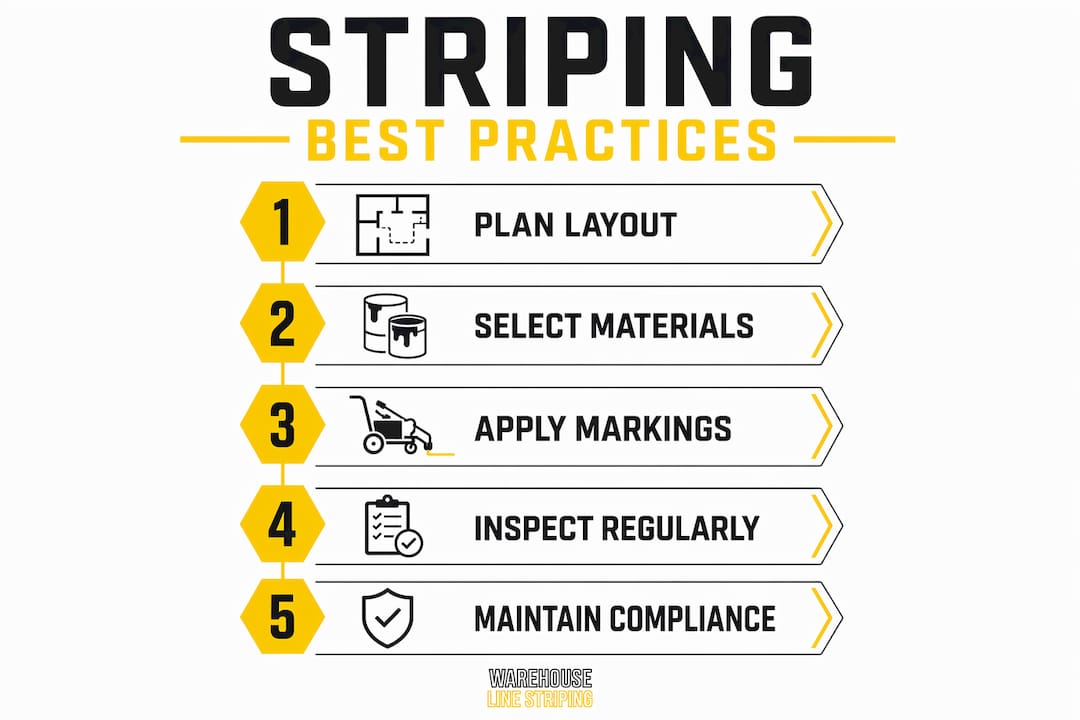
Dedicated traffic corridors make a measurable difference. Logistics simulation research shows that adding dedicated traffic corridors and refining zone divisions can increase load throughput by up to 35% and reduce forklift travel distance by over 3%. That throughput gain comes directly from striping that separates active lanes from buffer zones. When lanes are clearly marked, workers stop improvising paths and follow the system.
A practical layout separates four distinct zones with striping:
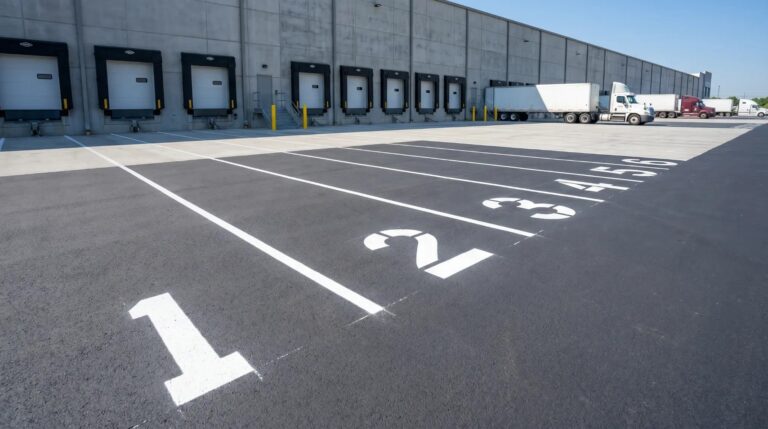
- Inbound receiving lanes: Marked from dock doors inward, wide enough for a loaded pallet jack or forklift to maneuver without crossing into adjacent lanes.
- Outbound staging lanes: Positioned on the opposite side of the facility, clearly separated from inbound flow by color or pattern.
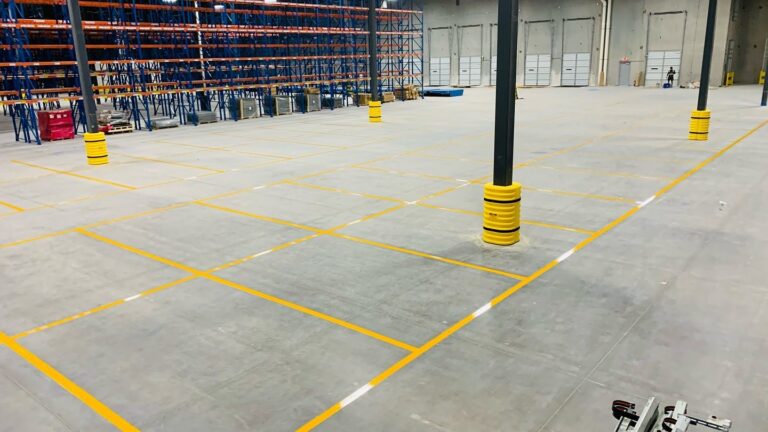
- Cross-transfer corridor: A central aisle connecting inbound and outbound sides, marked for both forklift and pedestrian traffic with appropriate widths.
- Exception and returns lanes: Isolated from primary flow to prevent freight from blocking active lanes.
- Buffer staging areas: Marked distinctly from active loading lanes. Staging lane confusion turns docks into long-term storage spaces, which defeats the purpose of cross-docking entirely.
Aisle width matters as much as marking width. Standard cross-dock aisles for counterbalance forklifts require at least 12 feet of clear travel space. Narrow aisles designed for reach trucks need 8–10 feet. Striping must reflect the actual equipment in use, not a generic template.
Pro Tip: Run a traffic simulation or time-motion study before finalizing your lane layout. Watching where workers actually walk versus where you expect them to walk reveals gaps that no floor plan catches on paper. Check out cross-docking floor layout examples to see how real facilities have solved this problem.
What are the step-by-step best practices for applying dock lane markings?
Implementation is where plans either hold up or fall apart. The first decision is material selection.
Tape striping suits flexible layouts and areas with frequent reconfigurations because it installs with no curing downtime. Paint, particularly epoxy-based paint, suits high-traffic forklift routes where durability is the priority. Paint requires surface curing time but outlasts tape significantly in heavy-use zones. Warehouse Line Striping uses industrial-grade epoxy coatings rated to last 3–7 years, which reduces the frequency of full reapplication cycles.
Follow this sequence for a clean, compliant installation:
- Clean and prepare the surface. Remove oil, dust, and old marking residue. Epoxy bonds poorly to contaminated concrete, and tape lifts from dirty floors within weeks.
- Lay out the design with chalk lines. Snap chalk lines before applying any material. This step catches alignment errors before they are permanent.
- Mark dock edges first. Dock edge hazard markings are the highest-priority safety marking in any loading dock striping guide. Apply these before any lane markings.
- Apply traffic lane markings. Work from the dock doors inward, following your layout plan. Use 4-inch lines for forklift lanes and 6-inch lines for pedestrian crossings.
- Mark staging and buffer zones. Use a distinct color or pattern to separate buffer areas from active lanes. This distinction prevents dock areas from becoming storage zones.
- Mark fire lanes and clearance zones. Red markings around fire extinguishers, sprinkler controls, and electrical panels must remain completely unobstructed.
- Allow full cure time before reopening lanes. Epoxy paint typically requires 24–48 hours. Opening lanes early damages the finish and shortens marking life.
| Zone type | Recommended material | Stripe width | Color |
|---|---|---|---|
| Forklift traffic lanes | Epoxy paint | 4 inches | Yellow |
| Pedestrian crossings | Epoxy paint or tape | 6 inches | Yellow or white |
| Dock edge hazard zones | Epoxy paint | 4–6 inches | Black and yellow alternating |
| Staging and buffer areas | Tape | 4 inches | Orange or blue |
| Fire and clearance zones | Epoxy paint | 4–6 inches | Red |
Pro Tip: For facilities that run 24/7, schedule striping in sections during off-peak shifts. Warehouse Line Striping’s installation teams work around operational schedules to minimize disruption. Review the industrial floor marking material selection guide before committing to a material for each zone.
How to maintain and audit your striping for long-term compliance?
Striping does not maintain itself. Faded or peeling lines are treated as non-compliance during OSHA audits. That means a marking that was perfect at installation can become a liability within months if maintenance is not scheduled.
Signs that markings need attention:
- Fading: Lines that are no longer visible from forklift operator height (approximately 8–10 feet) need immediate touch-up.
- Peeling or lifting tape: Lifted tape edges create trip hazards and signal that the underlying surface needs cleaning before reapplication.
- Partial obscuring by debris or pallets: Even temporary obstruction can trigger a compliance finding during an unannounced inspection.
- Color shift: Yellow that has turned cream or white no longer communicates the correct ANSI Z535.1 meaning.
Quarterly inspections and annual touch-ups are the recommended schedule for maintaining visibility and OSHA compliance over the long term. Build these into your facility maintenance calendar, not as a reactive task but as a fixed operational cost. Pairing inspections with contractor maintenance scheduling software helps managers track inspection dates and flag overdue touch-ups before they become audit findings.
Staff training is as important as the markings themselves. Workers who understand what each color means, and why clear zones must stay clear, enforce the system informally every shift.
What are the common mistakes to avoid in cross-docking lane striping?
Most striping failures are predictable. Pallets blocking designated aisles are the leading cause of warehouse floor marking violations. Even a single pallet placed temporarily over a lane line can constitute a compliance failure during an inspection. The fix is not more enforcement. It is designing lanes wide enough and staging areas clearly enough that workers have no reason to use aisles as overflow storage.
Common mistakes that undermine cross-docking efficiency:
- Inconsistent color codes across zones. Using yellow for both traffic lanes and staging areas removes the visual distinction workers rely on. Pick one meaning per color and apply it everywhere.
- Ignoring clearance zones around fire equipment. Red clearance markings around fire extinguishers and electrical panels are non-negotiable. Minor obstructions over striping lines can render aisles non-compliant during inspections.
- Failing to separate active lanes from buffer zones. Undifferentiated staging areas become informal storage, which blocks active dock lanes and slows throughput.
- Choosing tape for high-traffic forklift routes. Tape degrades quickly under repeated forklift wheel contact. Use epoxy paint for any lane that sees daily forklift traffic.
- Skipping the layout simulation step. Striping a layout that was never tested against actual traffic patterns locks in bottlenecks. Adjust the design before applying permanent markings.
The logistics facility striping best practices guide covers additional scenario-specific pitfalls for high-volume distribution centers.
Key Takeaways
Effective cross-docking lane striping requires ANSI-compliant color coding, zone-specific stripe widths, durable materials matched to traffic type, and a scheduled maintenance program to stay OSHA-compliant.
| Point | Details |
|---|---|
| Use ANSI Z535.1 color standards | Yellow for traffic lanes, black and yellow alternating for hazard zones, red for clearance areas. |
| Match stripe width to zone type | Use 4-inch lines for forklift lanes and 6-inch lines for pedestrian crossings. |
| Separate active lanes from staging | Distinct colors for buffer zones prevent docks from becoming storage areas and protect throughput. |
| Choose materials by traffic intensity | Use epoxy paint for forklift routes and tape for flexible or low-traffic zones. |
| Schedule quarterly inspections | Faded or peeling markings equal non-compliance during OSHA audits. |
What I’ve learned after watching hundreds of cross-dock layouts succeed and fail
The managers who get cross-docking right share one habit: they treat the floor as a communication system, not a compliance checkbox. The striping is not there to satisfy an auditor. It is there to tell a forklift operator, at a glance, exactly where to go and what to avoid. When that communication breaks down, throughput drops and incidents rise.
The most common mistake I see is designing the layout on paper without watching how freight actually moves. Managers draw lanes based on door positions and then stripe them. Workers then create informal paths that cut across those lanes because the designed route adds 40 feet to every trip. The fix is simple: observe first, stripe second. A one-day time-motion study before installation saves months of rework.
The second pattern I see is treating maintenance as optional. Facilities that budget for quarterly touch-ups never face the scramble of restriping an entire dock floor before an audit. Facilities that skip maintenance end up doing exactly that, at three times the cost and with operational disruption they cannot afford.
My honest recommendation: pair your layout design with lean floor design principles from the start. Lean thinking and good striping solve the same problem. Both reduce wasted motion, clarify roles, and make the right path the easiest path. When your floor markings align with your operational workflow, you stop managing the floor and start managing the operation.
— ET
Warehouse Line Striping’s floor marking solutions for cross-dock facilities
Warehouse Line Striping has completed over 10,000 floor marking projects across warehouses, distribution centers, and cross-dock facilities nationwide. Their floor marking systems for inventory flow guide covers the full range of 2026 safety and compliance requirements, from ANSI color coding to dock edge hazard specifications.
Every installation uses industrial-grade epoxy coatings rated to last 3–7 years, with 24/7 customer support and scheduling designed to work around your operational hours. If your current dock lane markings are faded, inconsistent, or overdue for an audit, Warehouse Line Striping’s team can assess your facility and deliver a compliant, durable layout without shutting down your operation. Reach out to discuss your facility’s specific cross-dock layout needs.
FAQ
What stripe width is required for cross-dock forklift lanes?
Standard forklift lane markings are 4 inches wide for visibility from operator height. Pedestrian crossings and high-visibility lanes require 6-inch stripes.
What colors should cross-docking lane markings use?
ANSI Z535.1 designates yellow for traffic lanes and alternating black and yellow for hazard zones. Red marks fire equipment and electrical panel clearance areas. No federal OSHA rule mandates specific colors, but consistent application of ANSI codes is the recognized industry standard.
How often should cross-dock striping be inspected?
Quarterly inspections and annual touch-ups are the recommended schedule. Faded or peeling markings are treated as non-compliance during OSHA audits, so visibility checks should be a fixed item on your facility maintenance calendar.
What is the correct dock edge hazard marking specification?
Dock edge hazard markings use 4–6 inch wide alternating yellow and black diagonal stripes at 45-degree angles, extending at least 12 inches back from the edge to communicate the physical drop hazard.
When should tape be used instead of paint for lane striping?
Use tape for flexible layouts and zones that change frequently, because it installs with no downtime. Use epoxy paint for high-traffic forklift routes where durability is the priority, as tape degrades quickly under repeated wheel contact.