How long does epoxy floor paint take to cure in a warehouse?
Epoxy floor paint cure time in a warehouse depends on product type, environmental conditions, coat thickness, and intended traffic. For warehouse managers and safety coordinators planning line striping or aisle delineation, understanding the realistic timeline — from tack-free to full chemical and mechanical cure — is critical to minimize downtime and ensure OSHA compliance for floor marking systems. This guide explains typical cure schedules, real-world timelines for forklift traffic lanes and industrial distribution centers, and actionable tips to accelerate cures without compromising durability.
How epoxy floor paint curing works
Epoxy coatings and epoxy floor paint are typically two-part systems: a resin and a hardener. When mixed, a chemical reaction (crosslinking) begins that transforms the liquid into a solid film. “Dry to the touch” or tack-free is not the same as “fully cured.” Manufacturers usually specify pot life, recoat windows, and full cure times. Temperature, relative humidity, substrate preparation, ventilation, and coat thickness all influence cure speed and final performance.
OSHA references and industry standards emphasize safe floor marking practices and durable floor coatings for workplace safety and traffic control; ensuring proper cure is part of meeting OSHA guidance for floor marking systems [1].
Typical cure times for epoxy floor paint in a warehouse
Below is a practical table showing approximate cure stages for common epoxy formulations used in warehouses. Use these as planning benchmarks; always follow the product data sheet for the exact material you select.
| Epoxy Type | Tack-free | Light foot traffic | Light forklift / pallet jack | Full cure (heavy forklift, chemical resistance) |
|---|---|---|---|---|
| Fast-cure 2-part epoxy | 1–3 hours | 4–8 hours | 24 hours | 3 days |
| Standard 2-part epoxy (70°F / 21°C) | 2–6 hours | 12–24 hours | 24–72 hours | 7 days |
| Epoxy novolac (high chemical resistance) | 4–8 hours | 24 hours | 48–72 hours | 7–14 days |
| Water-based epoxy coatings | 2–8 hours | 12–48 hours | 48–96 hours | 7–14 days |
Key notes:
– Times assume ambient temperatures around 68–77°F (20–25°C) and moderate humidity.
– Colder temperatures and high humidity slow cure dramatically.
– Thicker applications increase cure time and risk of surface defects (bubbling, amine blush).
Real-world timeline for warehouse operations and line striping
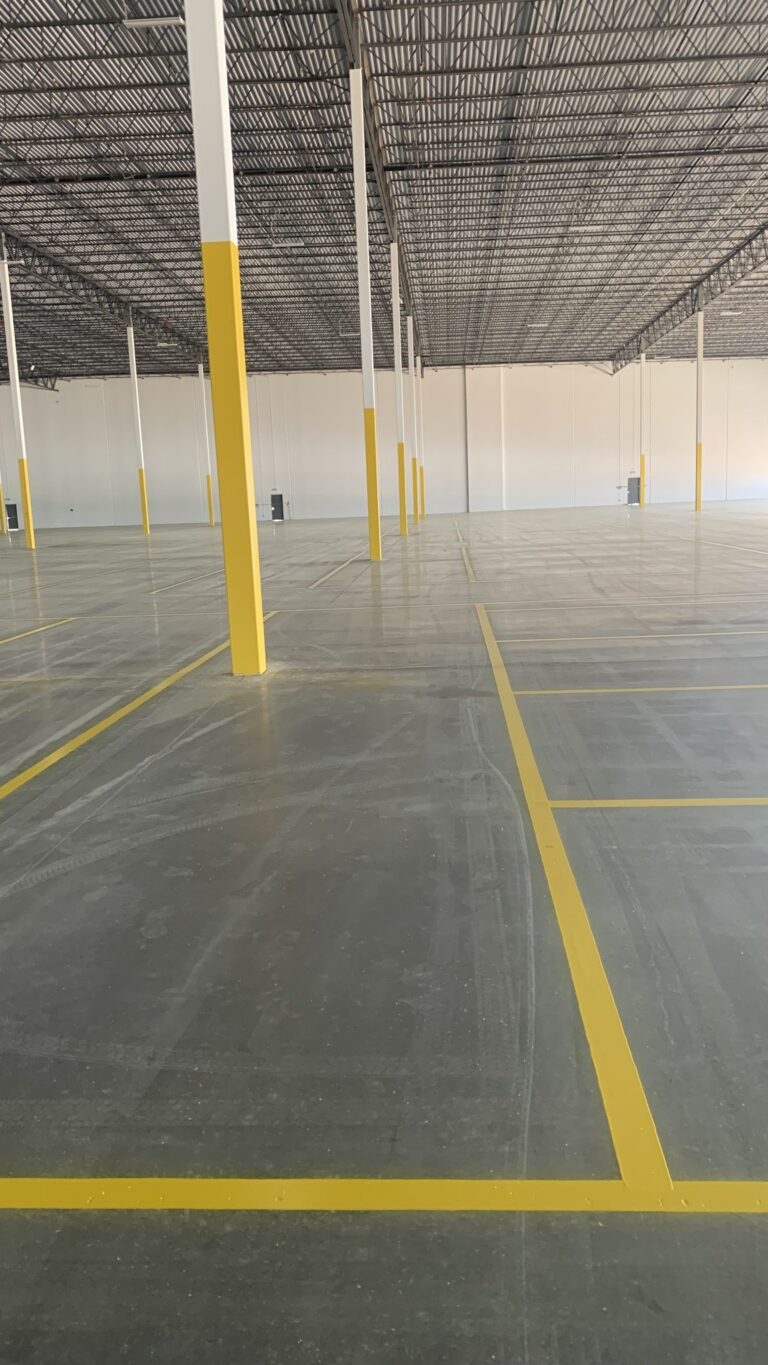
When scheduling line painting, aisle delineation, or repainting forklift traffic lanes in active industrial distribution centers, plan conservative windows to avoid rework and safety hazards:
- 0–8 hours: coating is tack-free. Workers should still avoid contact.
- 12–24 hours: safe for pedestrian traffic and light foot traffic; ideal for marking crosswalks and small aisle delineation if protected.
- 24–72 hours: acceptable for light equipment and limited pallet jack use. Temporary barriers recommended.
- 7 days: full mechanical and chemical cure for most standard epoxies; authorized for heavy forklift traffic lanes, staging areas, and cleaning with detergents or solvents.
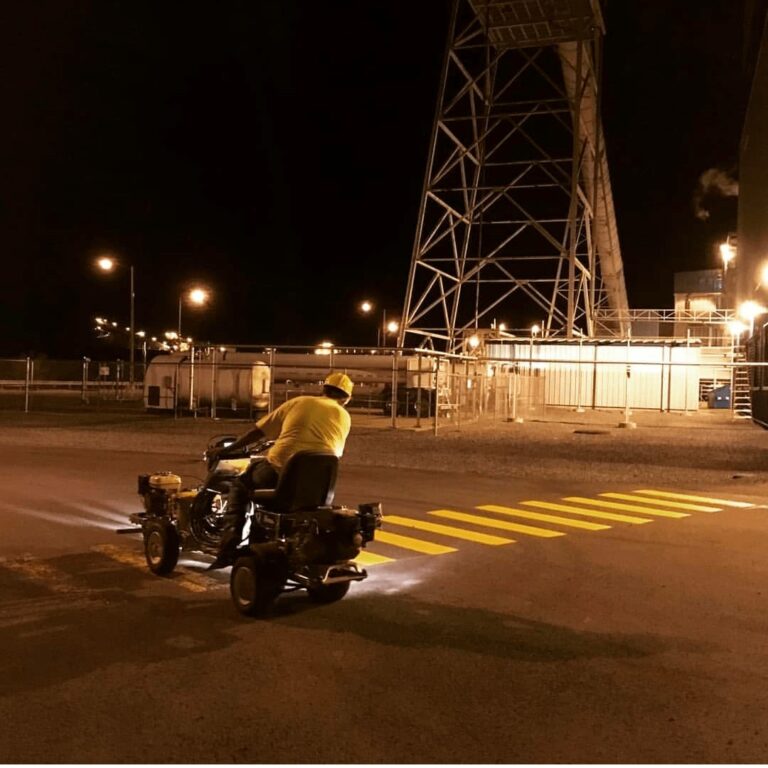
For line striping specifically, thin epoxy lines (epoxy line painting) cure faster than full floor coatings. Coordinate stripe application after the floor coating reaches an appropriate recoat window or full cure based on manufacturer guidance. Learn more about our epoxy line painting and warehouse line striping services to align project timing with operational needs: epoxy line painting and warehouse line striping services.
When to reopen forklift traffic lanes and aisles
- For critical forklift traffic lanes and high-frequency aisle delineation, allow a full cure (typically 7 days) when possible to protect the coating and maintain clear markings under heavy abrasion.
- If downtime is limited, consider using fast-cure epoxy formulations and schedule work during off-shifts or weekend windows.
- Use physical barriers and signage to prevent premature traffic on newly striped areas.
Best practices to ensure proper cure and OSHA compliance
- Control temperature: Maintain 65–85°F (18–29°C) in the curing area when possible. Cold warehouses require temporary heating for predictable cures.
- Manage humidity: High humidity can slow cure or cause amine blush. Ventilation reduces moisture and solvent buildup.
- Follow surface prep: Remove oils, dust, and contaminants; profile concrete for adhesion. Poor prep leads to delamination even if cure is complete.
- Thin, consistent coats: Avoid overly thick applications that trap solvents and extend cure times.
- Product selection: For chemical or solvent exposure, choose novolac-type epoxies; for fast turnaround, select a fast-cure formulation.
- Documentation and labeling: Record cure times and product data sheets to maintain OSHA compliance for floor marking systems and workplace safety [1].
For professional execution that balances speed and durability, partner with experienced crews familiar with warehouse environments and aisle delineation standards. Warehouse Line Striping offers nationwide expertise in durable markings and coatings—see our warehouse floor striping page for details, or contact us to schedule an assessment.
Frequently Asked Questions
How can I make epoxy floor paint cure faster?
You can accelerate curing by increasing ambient temperature, lowering relative humidity, using adequate ventilation, and selecting a fast-cure epoxy formulation. Ensure proper mixing ratios and avoid over-thinning. Do not exceed manufacturer-recommended catalyst levels to speed cure—this can compromise film properties.
Can I apply line striping before the epoxy floor coating is fully cured?
Yes, in many cases you can apply epoxy line painting in a recoat window if the product data sheet allows it and the surface is tack-free and prepped. However, for heavy forklift traffic lanes and chemical-heavy areas, wait for full cure (often 7 days) to ensure adhesion and longevity. If timing is tight, discuss fast-cure options with your contractor.
Areas We Serve
Warehouse Line Striping is a national provider serving industrial distribution centers, manufacturing plants, and warehouses across the United States. Major areas include:
– Northeast: New Jersey, New York, Philadelphia, Connecticut
– Midwest: Chicago, Detroit, Cleveland, Indianapolis
– South: Atlanta, Dallas-Fort Worth, Houston, Miami
– West: Los Angeles, Phoenix, San Diego, Seattle
– Nationwide coverage for large-scale distribution center projects and multi-site rollouts
If you don’t see your city listed, please reach out via our contact us page to discuss local availability.
Conclusion
Epoxy floor paint cure time in a warehouse varies by product and conditions—tack-free in hours, usable for light traffic within 12–72 hours, and fully cured for heavy forklift use often in 7 days. Plan around temperature, humidity, coat thickness, and traffic requirements to protect your investment and meet OSHA expectations for floor marking systems [1]. For project planning, field expertise, and fast, durable aisle delineation or forklift traffic lane marking, rely on specialized services like our warehouse line striping services and epoxy line painting. Contact us to schedule a site evaluation and precise cure-time recommendations tailored to your facility.
References
[1] https://www.osha.gov