Step-by-step guide to warehouse line striping layout design
A clear, code-compliant warehouse line striping layout improves safety, productivity, and space utilization. This step-by-step guide walks you through planning, designing, and installing a durable floor marking system for warehouses, distribution centers, and industrial distribution centers — including how to plan forklift traffic lanes, aisle delineation, product selection like epoxy coatings, and ongoing maintenance to meet OSHA compliance.
Planning and Preparation
- Conduct a site survey
- Measure overall square footage and ceiling heights.
- Record existing floor conditions (cracks, coatings, oil stains).
Observe traffic patterns during peak and off-peak times to understand forklift traffic lanes and pedestrian flows.
Define objectives and compliance requirements
- Safety: separate pedestrian walkways from forklift traffic lanes with clear aisle delineation.
- Operational: maximize racking and staging efficiency.
Regulatory: ensure markings meet OSHA requirements for workplace aisle marking and hazard visibility [1].
Select floor marking system and materials
- Consider durability, curing time, and chemical resistance. Epoxy coatings are common for heavy-traffic aisles; tape may be appropriate for temporary layouts.
Balance upfront installation time vs long-term maintenance.
Map stakeholders and zones
- Coordinate with operations, safety, and maintenance teams.
- Identify loading docks, staging areas, equipment zones, and emergency exits.
For professional help with layout planning and execution, see our warehouse line striping services.
Step-by-Step Layout Design and Installation
- Create the initial layout plan
- Use CAD or scaled drawings to design aisle widths, cross aisles, and forklift traffic lanes.
- Apply aisle delineation standards (e.g., 6″ or 4″ line widths depending on visibility and pallet widths).
Color-code zones for functions (yellow for aisles, red for fire lanes, green for safety zones).
Validate dimensions on the floor
- Use tape and chalk to mock up the proposed layout during non-peak hours.
Walk the routes with forklifts and foot traffic to confirm sightlines and queuing behavior.
Choose products and finishes
- Decide between epoxy line painting, thermoplastic, tape, or polyurethane. See the comparison table below.
Select anti-slip additives or reflective beads for low-light areas.
Surface preparation
- Clean thoroughly: remove oil, dust, and existing loose coatings.
Repair cracks and level uneven sections. Proper prep ensures epoxy coatings and other products bond correctly.
Marking and installation
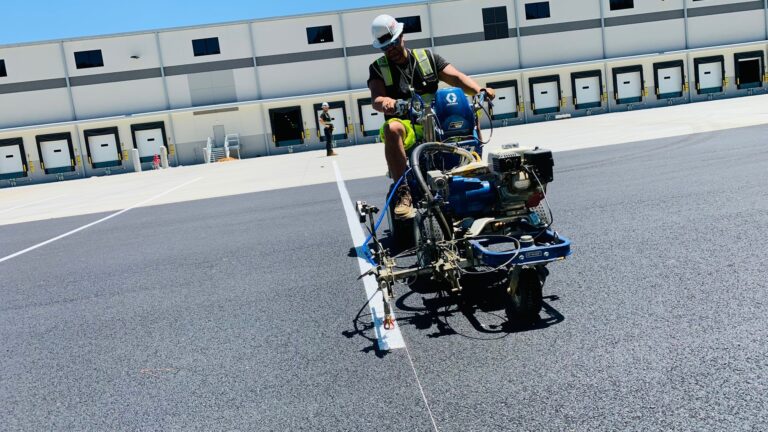
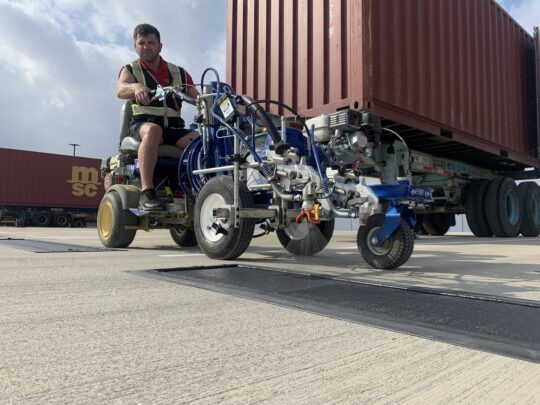
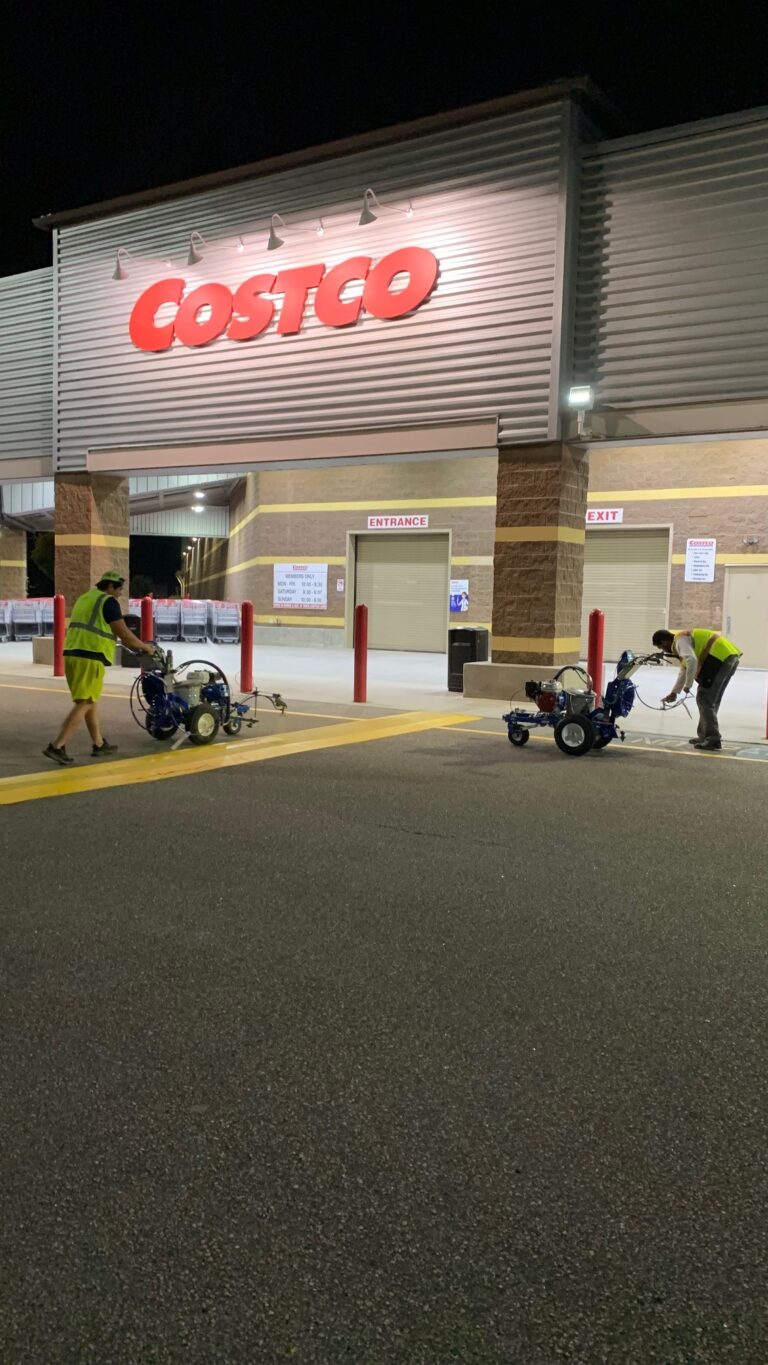
- Apply masking tape for clean edges. Use professional line striping equipment for precision.
Apply coatings per manufacturer instructions. Epoxy line painting often requires primer and multiple coats for durability.
Curing and inspection
- Allow adequate cure time before reopening lanes (epoxy cures vary by product).
Inspect line widths, color consistency, and adhesion. Make adjustments where needed.
Maintenance plan
- Schedule periodic inspections and touch-ups. Implement a simple cleaning routine to protect markings.
- Use temporary signs or portable barriers during re-striping to maintain safety.
Table: Common Floor Marking Options and Best Uses
| Material | Durability | Typical Use | Curing/Installation Time |
|---|---|---|---|
| Epoxy coatings | High | Forklift traffic lanes, heavy-duty aisle delineation | 24–72 hours depending on product |
| Thermoplastic | Very High | High-wear zones, outdoor loading areas | Rapid melt-application, cool time |
| Floor marking tape | Low–Medium | Temporary layouts, quick changes | Immediate use, variable longevity |
| Polyurethane paint | Medium–High | Chemical-resistant areas, moderate traffic | 12–48 hours |
Specialized considerations for industrial distribution centers
- Narrow-aisle and high-density storage require precise aisle delineation and extra-wide markings at turning points.
- Coordinate line placement with racking safety zones, conveyor lines, and picking paths.
- For long-term durability in high-throughput centers, prioritize epoxy coatings and professional epoxy line painting services.
Frequently Asked Questions
How wide should aisle lines be for forklift traffic lanes?
Aisle width and line width depend on equipment and load sizes. Common practice is 4″ to 6″ stripe widths for clear visibility. For busy forklift traffic lanes in industrial distribution centers, 6″ lines increase conspicuity. Always validate with your internal safety team and consider OSHA guidance for pedestrian/workplace separation [1].
How often should warehouse line striping be maintained?
Inspect markings monthly for high-traffic areas and quarterly for lower-traffic zones. Touch-ups may be needed annually or biennially depending on wear. Implement routine cleaning and immediate repairs in high-wear forklift traffic lanes to maintain OSHA compliance and reduce accident risk.
Areas We Serve
Warehouse Line Striping provides nationwide warehouse line striping and floor marking services. Key areas include:
– Northeast: New York, New Jersey, Massachusetts
– Midwest: Illinois, Ohio, Michigan
– South: Texas, Georgia, Florida
– West: California, Washington, Arizona
– Major metro industrial hubs and industrial distribution centers across the U.S.
For service inquiries or to schedule a site survey, please contact us through our contact us page.
Conclusion
A well-planned warehouse line striping layout improves safety, regulatory compliance, and operational efficiency. Follow the step-by-step process: assess the site, design clear aisle delineation and forklift traffic lanes, choose durable materials like epoxy coatings when appropriate, prepare surfaces correctly, and maintain markings proactively. For expert layout design and professional installation, see our warehouse floor striping and epoxy line painting services or reach out directly via our warehouse line striping services and contact us pages.
References
[1] https://www.osha.gov