Lean Warehouse Floor Design Examples That Cut Waste
A lean warehouse is defined as a facility where every square foot, travel path, and storage zone is arranged to eliminate non-value-added movement and maximize throughput. The best examples of lean warehouse floor designs share three traits: they minimize picker travel distance, support clear material flow, and embed safety through visual management. This article covers U-shaped, straight-line, and modular zone layouts, backed by real case study data from operations that cut forklift travel by over 60%, reduced pick time dramatically, and grew storage capacity without expanding the building footprint.
What are the key characteristics of lean warehouse floor designs?
Lean warehouse floor design, also called lean layout optimization in industrial engineering, starts with one question: where does time get wasted? Time-motion studies consistently show that non-value-added movement accounts for roughly two-thirds of picking time. That means layout changes deliver higher ROI than automation investments made before the floor plan is fixed.
Four principles define every effective lean layout:
- Minimize travel distance. Rack placement, pick zones, and dock positions should reflect actual order volume, not legacy arrangements.
- Support FIFO flow. Flow-thru racking and zone sequencing keep inventory rotating correctly without extra handling.
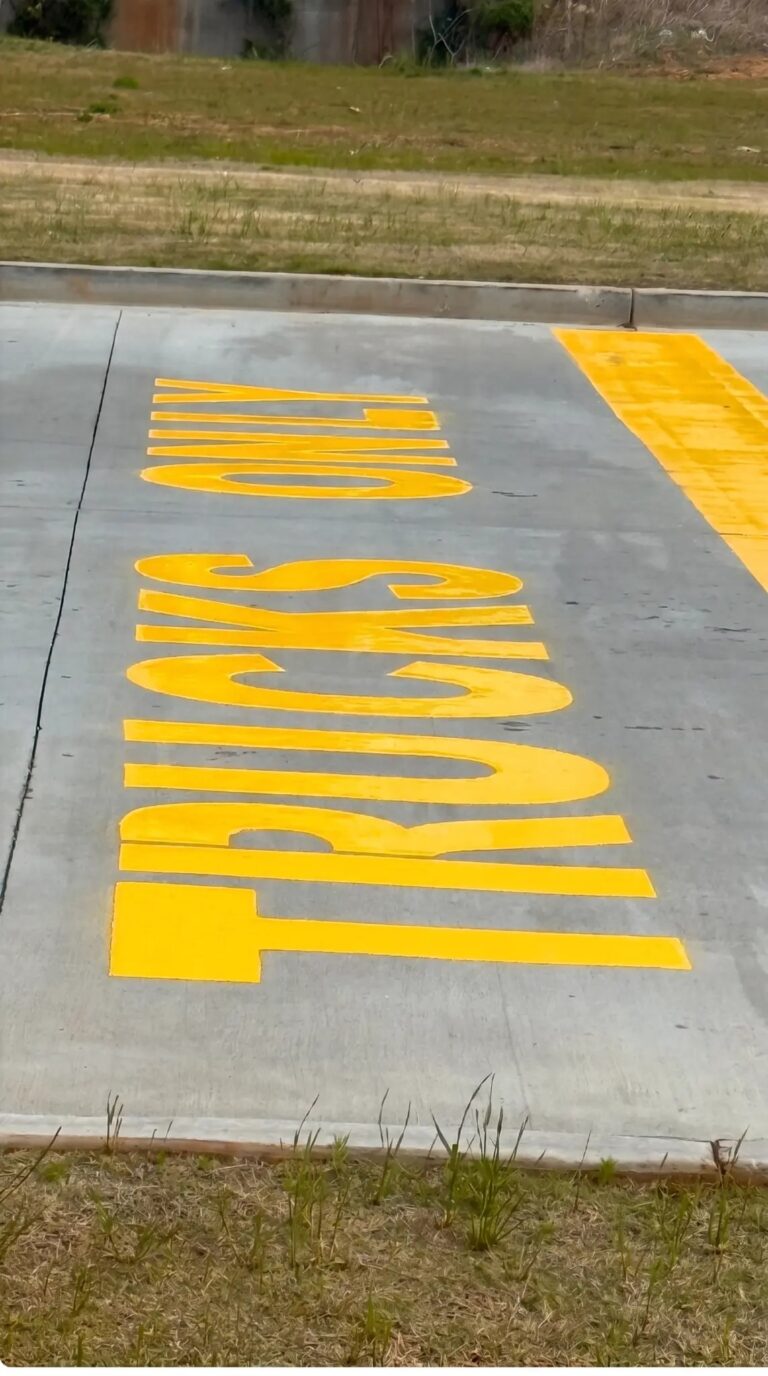
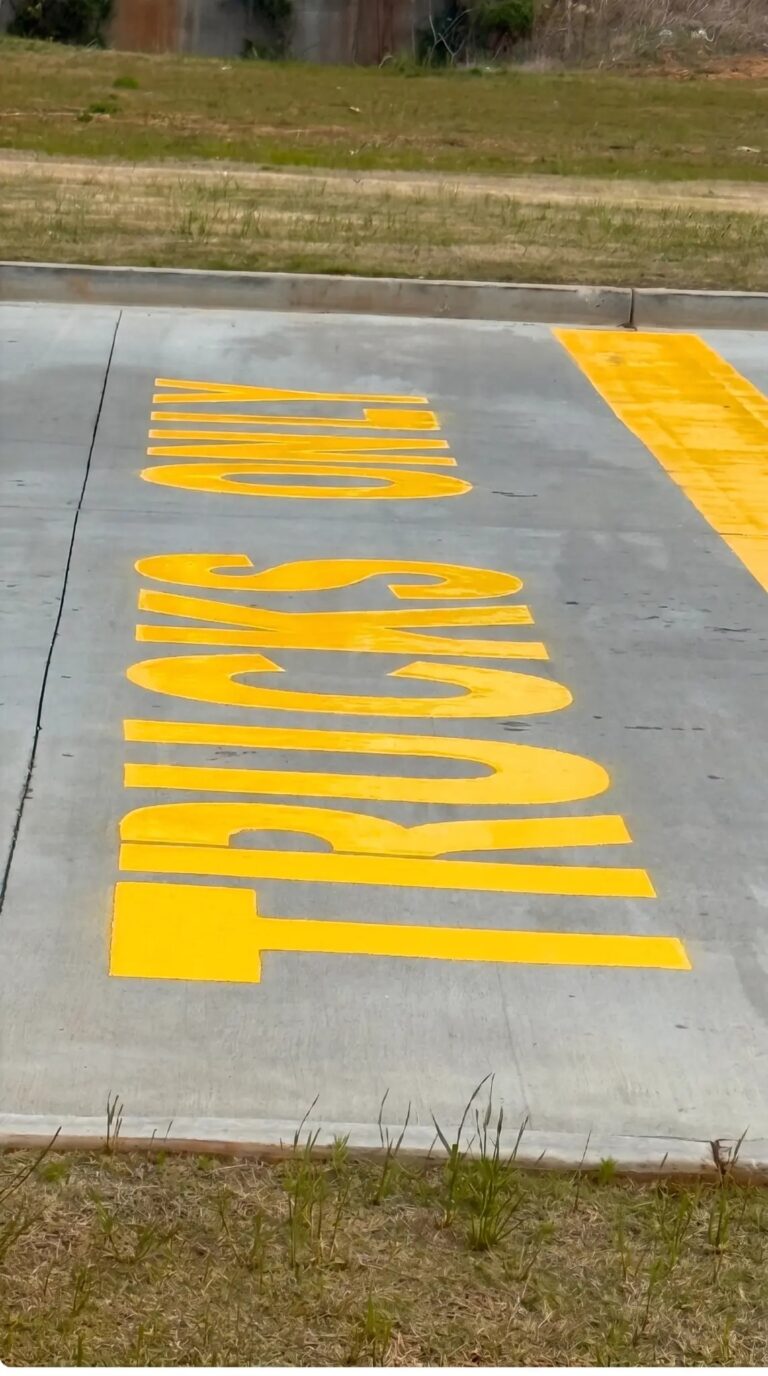
- Apply visual management. Floor markings aligned with 5S and OSHA standards make traffic lanes, storage zones, and hazard areas immediately visible to every operator.
- Optimize dock door assignment. Shipping docks should handle the highest pick volume. Receiving docks handle lower-volume pallet movement. Misaligned dock assignments force unnecessary cross-facility travel.
OSHA 29 CFR 1910.176(a) requires permanent aisle marking wherever mechanical equipment operates. The regulation mandates marking but does not specify color or minimum width. Industry practice uses 4–6 inch wide lines, with yellow as the standard color for aisles and traffic lanes, informed by 5S visual management principles.
Pro Tip: Map your top 20% of SKUs by pick frequency and position them closest to the shipping dock before redesigning anything else. That single change often cuts travel distance more than a full rack repositioning.
1. U-shaped layout examples for high-volume 3PLs
The U-shaped layout positions receiving and shipping docks on the same wall in separate bays. Goods enter on one side of the U, travel through storage and pick zones, and exit on the other side, all within a single supervised area. This configuration is common in high-volume 3PLs because it centralizes labor supervision and keeps forklift travel contained.
The operational advantages are concrete:
- Supervisors can monitor inbound and outbound activity from one position.
- Forklift routes stay short because put-away and retrieval happen within the same zone cluster.
- Cross-docking becomes practical because staging areas sit between the two dock bays.
- Labor can shift between receiving and shipping tasks without crossing the full building.
U-shaped designs outperform straight-line layouts when a facility handles mixed inbound and outbound volumes simultaneously. A linear layout forces forklifts to travel the full building length on every cycle. The U-shaped design cuts that distance by routing traffic through the center of the floor. For operations running multiple shifts with shared labor pools, that reduction in travel directly lowers labor cost per unit handled.
2. Straight-line layout examples for conveyor and cross-dock operations

The straight-line layout routes all material in one direction: goods enter at one end and exit at the other. This design works best for conveyor-based sorting systems and cross-docking operations where dwell time is minimal and throughput speed is the primary metric.
Straight-line floors eliminate the turning movements that slow forklifts and pickers in U-shaped or modular designs. Every aisle runs parallel to the flow direction, and dock doors align with the conveyor spine. The tradeoff is inflexibility. When order profiles change or a new client requires a different pick zone, the straight-line layout offers little room to adapt without disrupting the entire flow path.
This layout suits dedicated distribution centers with stable, high-volume SKU sets. Grocery distribution and parcel sortation are the clearest real-world examples. Operations with frequent product mix changes should look at modular zone designs instead.
3. Modular zone layout examples for omnichannel warehouses
Modular zone layouts divide the floor into independent pods, each configured for a specific client, product category, or fulfillment channel. Each pod contains its own storage, pick, and staging area. Pods can be reconfigured or expanded without touching adjacent zones.
This design supports omnichannel operations where a single facility ships direct-to-consumer, to retail stores, and to wholesale accounts simultaneously. Each channel has different pick profiles, packaging requirements, and throughput rates. A modular floor keeps those workflows separate and measurable. Operations managers can benchmark pod performance independently and reallocate space based on channel growth.
The limitation is density. Modular zones require buffer space between pods for traffic lanes and staging. That overhead reduces total storage capacity compared to a fully optimized U-shaped or straight-line floor. Facilities with tight space constraints should weigh that tradeoff carefully before committing to a modular design.
4. Dock door reassignment as a lean layout improvement
Swapping shipping and receiving dock doors to match actual volume flow is one of the highest-ROI lean changes a facility can make without moving a single rack. When high-pick-volume shipping operations use doors positioned far from the pick zone, every order cycle adds unnecessary travel. Reassigning those doors to align with the pick zone eliminates that waste immediately.
This change costs almost nothing structurally. The dock doors stay in place. The workflow changes. Receiving, which handles lower-volume pallet movement, takes the doors that are farther from the pick zone. Shipping, which drives the majority of picker movement, takes the doors closest to active storage. The result is a shorter average travel path for the highest-frequency operation in the building.
Pro Tip: Before any rack or door change, run a heat map of your top 50 SKU locations against your dock door positions. The gap between where pickers travel most and where your shipping dock sits is your single biggest layout inefficiency.
5. Aisle cut-through examples for reducing picker travel
Adding cut-through aisles in the middle of long rack rows gives pickers a direct path across the building instead of forcing them to travel to the end of every aisle. This change improves pick path topology without moving racks or changing storage assignments.
Long aisles without cut-throughs create a dead-end problem. A picker who needs an item two rows over must travel to the aisle end, cross over, and travel back. A single cut-through at the midpoint of a 200-foot aisle can cut that detour by half. The aisle network design matters as much as rack placement in determining total travel distance.
Cut-throughs also improve safety. They create additional escape routes and reduce the distance forklifts travel in pedestrian zones. Marking cut-through intersections with high-visibility floor lines is a requirement under lean visual management standards.
6. Flow-thru FIFO racking layout examples
Flow-thru racking uses gravity-fed lanes to advance product from the loading end to the picking end automatically. This supports FIFO inventory rotation without picker intervention and eliminates the back-and-forth travel of standard selective racking. The Catania Oils case study shows that flow-thru racking combined with lean layout cut pick time by more than 60% and grew storage from 12,000 to approximately 19,400 pallets while reducing staff from 22 to 12.
The design requires careful WMS integration to manage mixed pallet sizes. Partial pallets disrupt automation designed for full-pallet configurations. The practical solution is to split racking types: flow-thru lanes for full-pallet, high-velocity SKUs and selective racking for partial pallets and slow movers. That hybrid approach captures most of the efficiency gain without the operational failures that come from forcing all inventory into a single racking type.
7. The LVG model: lean layout with environmental metrics
The Lean-Visual-Green (LVG) model applies lean waste reduction, visual management, and environmental impact measurement together in a single redesign framework. A food warehouse redesign using the LVG model reduced forklift travel from 3.5 million to 1.3 million meters per year. CO2 emissions dropped from 35,372 to 13,926 kg per year as a direct result of shorter forklift routes.
That outcome matters beyond sustainability reporting. Shorter forklift travel means lower fuel or battery costs, less equipment wear, and reduced maintenance frequency. The LVG model makes those gains measurable and ties layout decisions to operational KPIs that finance teams recognize. For operations professionals building a business case for a redesign, the LVG framework provides the data structure to justify the investment.
Key takeaways
Lean warehouse floor design delivers the highest ROI when layout changes target travel distance reduction before any automation investment is made.
| Point | Details |
|---|---|
| U-shaped layout for 3PLs | Centralizes labor and shortens forklift routes by keeping receiving and shipping on the same wall. |
| Dock door reassignment | Aligning high-volume shipping doors with the pick zone cuts travel distance at zero structural cost. |
| Aisle cut-throughs | Mid-aisle cut-throughs reduce picker detours and improve safety without moving racks. |
| Flow-thru racking limits | Partial pallets require hybrid racking; forcing all inventory into flow-thru lanes causes operational failures. |
| LVG model for ROI | Measuring forklift travel and CO2 together builds a finance-ready case for lean redesign investment. |
What I’ve learned from lean floor designs that look good on paper
The most common mistake I see in warehouse redesign projects is treating the floor plan as a geometry problem. Operations teams spend weeks optimizing rack angles and aisle widths, then discover the real bottleneck is a dock door assignment that nobody questioned for 10 years. The layout looked efficient on the CAD drawing. The actual picker paths told a completely different story.
Data-driven layout analysis, specifically time-motion studies run before any physical change, is the only reliable starting point. Non-value-added movement is often invisible until you measure it. Once you see that two-thirds of pick time is travel, the priority list reorders itself fast.
The other thing I’d push back on is the assumption that automation solves layout problems. Flow-thru racking and conveyor systems are powerful, but they fail when the floor plan feeding them is misaligned with actual order profiles. Partial pallet picking breaks full-pallet automation. High-velocity SKUs stored far from the dock defeat the purpose of a fast conveyor. Fix the floor plan first. Then automate what the floor plan reveals as the true constraint.
Floor markings are the last piece most teams think about and the first thing operators actually use. A well-designed lean layout with unclear or faded aisle markings creates safety risk and slows operators who have to interpret ambiguous zones. OSHA’s aisle marking requirement exists because unmarked mechanical equipment zones cause injuries. Functional markings are not a finishing touch. They are part of the lean design itself.
— ET
How Warehouse Line Striping supports lean floor layouts
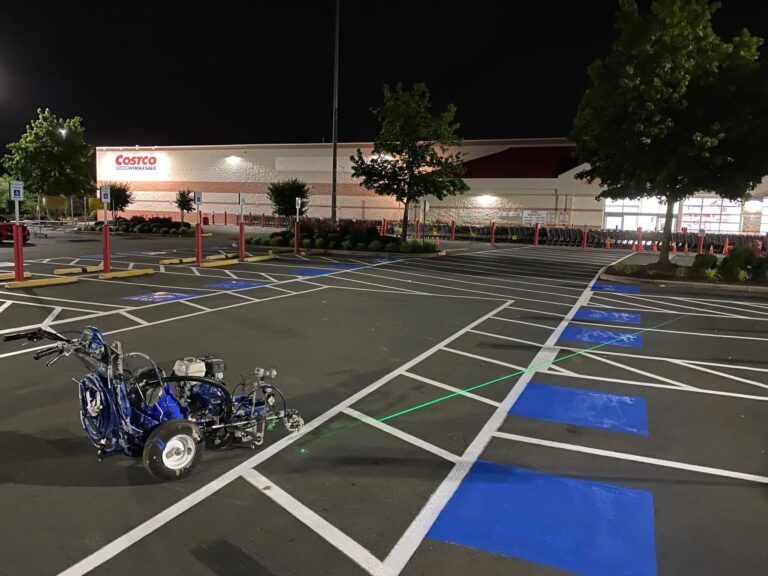
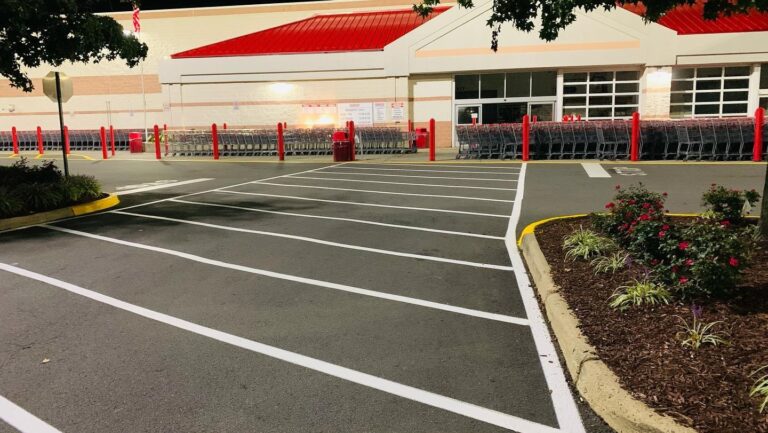
Lean floor designs only work when the markings on the ground match the workflow in the plan. Warehouse Line Striping installs OSHA-compliant, high-durability epoxy floor markings that last 3–7 years across warehouses, distribution centers, and industrial facilities nationwide. Their team has completed over 10,000 projects, covering everything from inventory flow marking systems to full aisle network layouts aligned with WMS integration.
Whether you are implementing a U-shaped layout, adding cut-through aisles, or reassigning dock zones, Warehouse Line Striping provides customized marking solutions that reflect your actual traffic patterns and OSHA requirements. Their floor markings and WMS integration service connects physical floor zones to your warehouse management system for accurate location tracking. Contact Warehouse Line Striping for a layout assessment and marking plan built around your operation.
FAQ
What is a lean warehouse layout?
A lean warehouse layout is a floor design that eliminates non-value-added movement by positioning storage, pick zones, and docks to match actual workflow volume. The goal is to reduce travel distance and improve throughput without expanding the building.
Which warehouse layout is best for high-volume 3PLs?
The U-shaped layout is the most effective design for high-volume 3PLs. It positions receiving and shipping docks on the same wall, centralizes labor supervision, and keeps forklift travel short.
Does OSHA require specific floor marking colors in warehouses?
OSHA requires permanent aisle marking where mechanical equipment operates but does not mandate specific colors or widths. Industry practice uses yellow lines at 4–6 inches wide, based on 5S visual management standards.
How much can a lean redesign reduce pick time?
A lean redesign using flow-thru FIFO racking and layout optimization cut pick time by more than 60% in the Catania Oils case study, while also growing storage capacity from 12,000 to approximately 19,400 pallets.
What is the LVG model in warehouse design?
The LVG (Lean-Visual-Green) model combines lean waste reduction, visual management, and environmental impact tracking into a single redesign framework. One food warehouse using the LVG model cut forklift travel distance by over 60% and reduced CO2 emissions from 35,372 to 13,926 kg per year.