Phased Floor Striping Installation: A Facility Manager’s Guide
A phased floor striping installation approach is a systematic method of applying floor markings in sequential stages that keep industrial facilities operational and OSHA-compliant throughout the process. Unlike a full-facility shutdown, this method segments work into defined zones, letting your team continue operations in active areas while striping progresses elsewhere. The tradeoff is a longer total timeline, but for most distribution centers and warehouses, continuous productivity outweighs a compressed schedule. Facility managers who understand the four core phases, the right materials, and the communication requirements will execute these projects with minimal disruption and lasting results.
What are the essential prerequisites for a phased floor striping installation?
Preparation determines whether a phased installation runs smoothly or stalls mid-project. Preconstruction assessment prevents costly mid-project changes and protects fixed-bid pricing. Skipping this step is the single most common reason phased projects generate expensive change orders.
Materials and equipment
Epoxy and latex paints are the two primary options for industrial floor striping. Epoxy coatings bond directly to concrete, resist forklift traffic, and last 3–7 years under heavy use. Latex paint applies faster and costs less upfront, but it wears down sooner in high-traffic zones. Warehouse Line Striping uses industrial-grade epoxy as its default material for exactly this reason.
Beyond paint, a standard phased installation requires:
- Line striping machines calibrated for the line width specified in your layout plan
- Surface grinders or shot blasters for concrete prep in each zone
- Masking tape rated for industrial use (standard painter’s tape lifts under forklift tires)
- Personal protective equipment including respirators, safety glasses, and non-slip footwear
- Temporary barricades and signage to isolate active work zones from live operations
Facility mapping and zone planning
Map every zone before work begins. Identify pedestrian corridors, forklift aisles, storage blocks, and dock areas. Assign each zone a phase number based on operational priority. Zones with the highest daily traffic typically go last, since disrupting them early creates the most friction. Cross-reference your zone map with shift schedules so striping crews work during low-activity windows.
Pro Tip: Photograph every zone before surface prep begins. These images serve as a baseline for quality checks at each phase and protect you if disputes arise over pre-existing floor damage.
How is the phased floor striping installation process structured step by step?
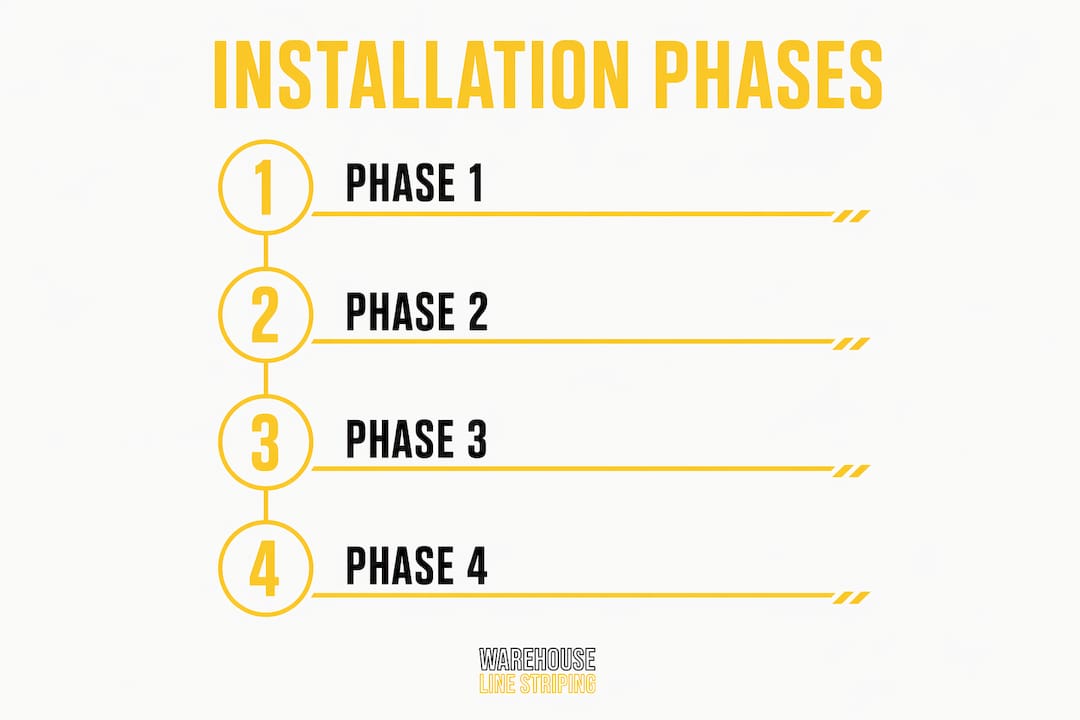
The step-by-step floor striping process follows four defined phases. Each phase builds on the last, and rushing any one of them creates problems that compound across the remaining work.
Phase 1: Pre-construction planning
Identify all stakeholders before a single line is drawn. This group includes operations supervisors, safety officers, receiving managers, and the installation crew lead. Multi-phased projects require planning that extends beyond the immediate next phase, treating warehousing and logistics as integral parts of the project scope. Confirm delivery schedules, inventory movements, and any planned facility changes that could affect zone access.
Create a master schedule that maps each phase to specific dates and shift windows. Share it with every stakeholder on day one. A change to Phase 2 timing will ripple into Phases 3 and 4 if no one communicates it immediately.
Phase 2: Surface preparation and initial zone striping
Surface prep is non-negotiable. Concrete must be clean, dry, and free of oil, grease, and existing coating residue before any new marking goes down. Shot blasting opens the concrete pores and gives epoxy a mechanical bond. Skipping this step produces markings that peel within weeks under forklift traffic.

Once the surface is ready, apply the first zone’s markings according to the approved layout. Use chalk lines or laser guides to keep lines straight and consistent. Standard OSHA-compliant aisle markings run at least 2 inches wide, though many facilities use 4-inch lines for higher visibility.
Phase 3: Cure time management and subsequent phases
Epoxy requires adequate cure time before foot traffic and certainly before forklift traffic. Rushing this window is the most common quality failure in phased projects. Keep the freshly striped zone barricaded until the manufacturer’s minimum cure time has passed, typically 24 hours for light foot traffic and 72 hours for full forklift loads.
Verify site readiness before beginning each subsequent phase. Confirm that construction in the next zone is complete, floor protection is in place, and access routes for the crew are clear. This check prevents the most common cause of phase delays: arriving on-site to find a zone still occupied or unprepared.
3D digital models that map work zones and power outages are a growing best practice for phased occupancy projects. These tools let you visualize sequencing conflicts before they happen on the floor.
Pro Tip: Schedule Phase 3 and beyond to begin at the start of a weekend or overnight shift. Cure time then overlaps with your lowest-traffic window, and the zone reopens before peak operations resume.
Phase 4: Inspection and touch-up
Walk every completed zone with the installation crew lead and your safety officer before reopening it to full operations. Check line width consistency, color accuracy against your layout plan, and edge definition. Document any areas requiring touch-up and complete them before moving to the next phase. This inspection step is also the right moment to confirm OSHA floor marking compliance for each completed zone.
What common challenges arise in phased floor striping and how are they managed?
Phased installations introduce coordination complexity that single-phase projects avoid. The challenges below appear in nearly every large-scale project, and each has a proven response.
Scheduling conflicts occur when operational needs and installation windows collide. The fix is a shared master schedule with 48-hour advance notice requirements for any change. Immediate communication among project managers, contractors, installers, and dealers prevents minor changes from cascading into multi-week delays.
Cure time pressure is common when operations managers push to reopen zones early. Epoxy that carries forklift traffic before full cure will delaminate, requiring full removal and reapplication. The cost of that rework far exceeds the cost of waiting the required 72 hours.
Unforeseen floor conditions include cracks, moisture intrusion, or previous coating layers that were not visible during the initial assessment. This is why preconstruction assessment matters so much. Discovering a moisture problem during Phase 3 of a six-phase project is far more disruptive than finding it before work begins.
“Zone-phased installation keeps your facility operational while flooring work progresses section by section, with the tradeoff being a longer total timeline compared to full shutdown. Facilities that cannot afford full shutdown benefit most from this method, maintaining productivity while completing striping work safely.”
Communication breakdowns between shift supervisors and the installation crew cause more delays than any technical problem. Assign one point of contact on the operations side and one on the installation side. All schedule changes route through those two people.
Pro Tip: Use construction timelapse documentation to record each phase from start to finish. The footage gives you a clear record of surface conditions, application quality, and timeline adherence that written logs alone cannot capture.
How does phased floor striping support OSHA compliance and facility safety?
OSHA floor marking standards require employees to recognize floor marking schemes at a glance. A phased installation keeps completed zones fully compliant while work continues in others. This means your facility never operates in a state of total non-compliance, even during a months-long project.
The safety benefits of a well-executed phased installation include:
- Continuous delineation of pedestrian corridors from forklift aisles, reducing the risk of vehicle-pedestrian collisions
- Clear identification of hazard zones, emergency exits, and staging areas throughout the project
- Maintained pick path visibility in active warehouse zones while adjacent areas are being marked
- Documented compliance records for each completed zone, available for OSHA inspections at any point during the project
Phased striping also supports traffic flow improvements that compound over time. As each zone is completed, forklift operators and pedestrians adapt to the new markings. By the time the final phase is done, the entire facility has been incrementally retrained on the new layout rather than facing a sudden, facility-wide change.
The logistics facility striping best practices that experienced installation teams follow are built around this principle: compliance is not a one-time event. It is a condition you maintain continuously, and phased installation is the method that makes continuous compliance possible during active projects.
Key Takeaways
A phased floor striping installation approach succeeds when preconstruction assessment, zone sequencing, cure time discipline, and real-time communication work together across every phase.
| Point | Details |
|---|---|
| Preconstruction assessment is non-negotiable | Assess floor conditions and map all zones before work begins to prevent costly mid-project changes. |
| Epoxy outperforms latex in heavy-traffic zones | Choose epoxy coatings for forklift aisles and high-wear areas; they last 3–7 years under industrial use. |
| Cure time cannot be rushed | Allow 72 hours before forklift traffic on fresh epoxy to prevent delamination and rework costs. |
| Communication drives schedule adherence | Assign one point of contact per side and route all changes through them to prevent cascading delays. |
| Phased installation maintains continuous OSHA compliance | Completed zones stay compliant while adjacent zones are being marked, protecting the facility throughout the project. |
What I’ve learned from managing phased striping projects in live facilities
The biggest mistake I see facility managers make is treating the phased installation schedule as a construction document rather than a living operations plan. The schedule belongs to operations just as much as it belongs to the installation crew. When operations managers own their phase windows, they protect them. When they see the schedule as someone else’s problem, they let inventory pile up in the next work zone and wonder why the project is running three weeks late.
The second lesson is harder to accept: the preconstruction walk is always worth more time than you give it. Every experienced installation team will tell you the same thing. The floor conditions you discover during that walk determine whether your fixed-bid price holds or your project budget doubles. Spending an extra day on assessment before work begins is the highest-return investment in any phased project.
Partnering with an experienced team matters more in phased projects than in single-phase work. The coordination demands are higher, the communication requirements are tighter, and the consequences of a missed cure window or a miscommunicated schedule change are more severe. Choose a team that has managed live-facility installations before, not one that is learning on your project.
— ET
How Warehouse Line Striping supports your phased installation project
Warehouse Line Striping has completed over 10,000 floor marking projects in warehouses, distribution centers, and manufacturing facilities nationwide. The team specializes in live-facility installations that keep operations running while work progresses zone by zone.
Every project starts with a thorough preconstruction assessment and a phased schedule built around your operational calendar. Warehouse Line Striping uses industrial-grade epoxy coatings, provides 24/7 support throughout the project, and handles removal of outdated markings before new lines go down. For facility managers who need a clear path to OSHA floor marking compliance without shutting down operations, Warehouse Line Striping delivers the planning depth and execution experience the job requires. Request a project consultation at warehouselines.com.
FAQ
What is a phased floor striping installation approach?
A phased floor striping installation approach applies floor markings in sequential zone-by-zone stages so a facility can remain operational throughout the project. Each phase covers a defined work area, with adjacent zones staying active until that section is complete.
How long does a phased floor striping project take?
Total duration depends on facility size, number of zones, and operational constraints. Zone-phased installation extends the overall timeline compared to a full-facility shutdown, but it eliminates the productivity loss that a shutdown creates.
What floor marking materials work best for industrial facilities?
Epoxy coatings are the standard choice for high-traffic industrial floors because they bond directly to concrete and withstand forklift loads for 3–7 years. Latex paint is a lower-cost option suited to lighter-duty areas.
How does phased striping maintain OSHA compliance during a project?
Completed zones meet OSHA floor marking standards immediately after each phase passes inspection. This keeps the facility in continuous compliance while remaining zones are still being marked, which satisfies OSHA’s requirement that employees recognize floor marking schemes at all times.
When should a facility choose phased installation over a full shutdown?
Phased installation is the right choice when a facility cannot afford to halt operations for the duration of a full striping project. It trades a longer project timeline for uninterrupted productivity, making it the preferred method for most active distribution centers and manufacturing plants.