Types of Receiving Dock Floor Markings: 2026 Guide
Receiving dock floor markings are the visual safety and operational guidelines applied directly to dock floors to manage forklift traffic, pedestrian zones, and hazard areas. These markings use materials like industrial-grade epoxy paint, adhesive tape, and anti-slip coatings to create clear boundaries that workers and equipment operators follow. Standards from OSHA and 5S color coding conventions define how these markings communicate risk and direct movement. The types of receiving dock floor markings you choose directly affect accident rates, workflow speed, and regulatory compliance at every shift.
What are the primary types of receiving dock floor markings?
Dock floor markings fall into several distinct categories, each serving a specific safety or operational function. Understanding each type helps you build a marking system that covers every hazard and workflow need on your dock floor.
- Dock edge markings: Yellow and black hazard striping runs along the dock edge to signal fall hazards. Falls are a leading cause of serious dock injuries, and high-contrast striping is the first line of defense.
- Forklift staging zones: Solid lines define where forklifts queue and park between loads. Organized staging prevents vehicle collisions and keeps traffic moving in one direction.
- Pedestrian exclusion zones: These markings physically separate foot traffic from forklift corridors. Workers on foot stay inside marked pedestrian lanes; forklifts operate in adjacent vehicle lanes.
- Speed limit zones: Floor stencils or painted text indicate maximum forklift speeds in congested areas near dock doors. Speed markings reinforce verbal policies with a constant visual reminder.
- Caution and hazard zones: Striped patterns in yellow or orange mark areas where workers must slow down or watch for specific risks, such as blind corners or overhead door clearance zones.
- Fire equipment zones: Red markings reserve floor space around fire extinguishers, sprinkler shutoffs, and emergency exits so access is never blocked.
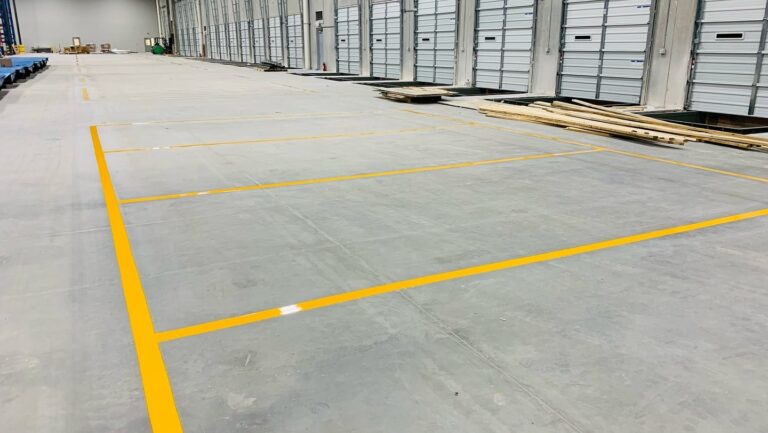
- Loading and unloading staging areas: Solid boundary lines define exactly where pallets and freight wait before moving into the warehouse. Clear staging zones prevent freight from spilling into forklift paths.
Pro Tip: Mark your dock edge first. Dock edge falls cause the most severe injuries, so that boundary line should be the widest and most visible marking on your floor before anything else goes down.
Which materials work best for dock floor markings?

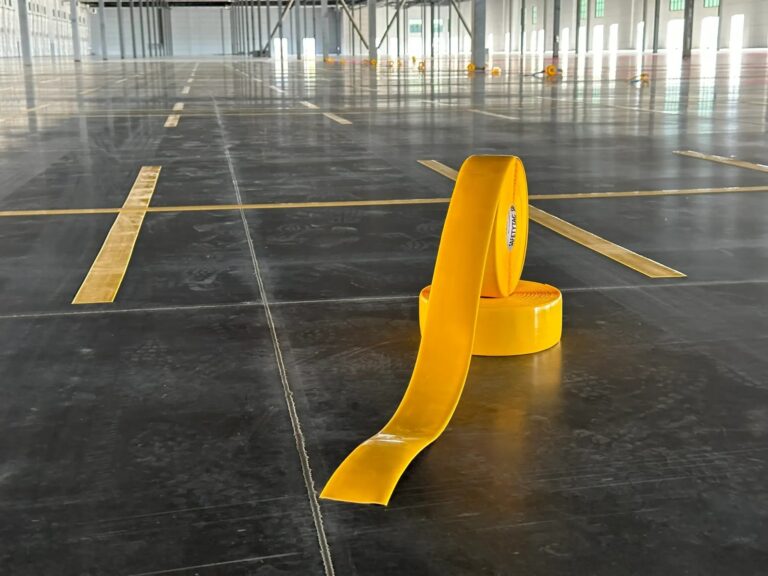
The material you choose determines how long your markings last and how much maintenance they require. The two primary options are industrial-grade epoxy paint and adhesive floor marking tape, each with distinct trade-offs.
| Feature | Epoxy Paint | Adhesive Tape |
|---|---|---|
| Durability | 3–7 years | 1–3 years |
| Application time | Requires curing; 24–48 hours downtime | Immediate; no curing needed |
| Best use case | Permanent aisles, dock edges, fixed zones | Temporary layouts, seasonal changes |
| Surface prep | Extensive cleaning and priming required | Minimal prep |
| Cost over time | Lower long-term cost | Higher replacement frequency |
| Slip resistance | Available with anti-slip additives | Anti-slip variants available |
Epoxy paint suits permanent dock configurations where forklift traffic is heavy and consistent. Tape suits temporary zones where layouts change frequently, such as seasonal receiving areas or pilot programs for new traffic patterns. Anti-slip tapes and coatings serve wet or oily dock surfaces where standard paint would become a hazard itself.
Paint requires planning. You need to schedule downtime for surface preparation, application, and curing before the dock reopens. Tape goes down fast and can be repositioned, but it wears faster under forklift wheels and requires more frequent replacement.
Pro Tip: Match your material to your dock’s activity level. A high-volume receiving dock running two shifts daily needs epoxy. A staging area that reconfigures monthly is a tape job.
How color coding improves dock safety and compliance
Color coding is the fastest communication tool on a dock floor. Workers read color before they read text, which makes consistent color use a direct safety mechanism.
OSHA 1910.22© requires that aisles and passageways be “appropriately marked,” but the regulation does not mandate specific colors. That means your facility sets its own color system. The critical requirement is consistency: the same color must mean the same thing everywhere in the building.
The standard color recommendations used across the industry are:
- Yellow: Caution zones, aisle boundaries, dock edges, and pedestrian paths
- Red: Danger areas, fire equipment locations, and emergency stop zones
- Green: Safety stations, first aid areas, and clear walkways
- Orange: Machine clearance zones and areas where equipment operates
- Black and yellow stripes: High-hazard zones such as dock edges and overhead door thresholds
- White: Storage areas, finished goods zones, and general boundary lines
Consistent color application increases worker recognition speed and reduces accidents at loading docks. New employees learn the system faster when colors are applied without exception across the entire facility. Mixing color meanings between departments creates confusion and raises accident risk.
What situational factors affect your marking choices?
No two receiving docks are identical. Dock design, traffic volume, environmental conditions, and facility layout all influence which marking types and materials perform best.
High-noise environments present a specific challenge. Auditory warnings like horns and alarms lose effectiveness when ambient noise is constant. Blue Spot forklift technology projects a visible floor beam ahead of moving forklifts to alert pedestrians when sound warnings fail. Floor markings alone are not enough in these environments. Pairing markings with visual alert technology creates a layered safety system.
Heavy forklift traffic accelerates marking wear. Docks running multiple forklifts across multiple shifts need epoxy paint rated for industrial traffic, not standard floor paint. The standard marking width of 4 inches provides the visibility forklift operators need from their seat height. Narrower lines disappear under tire wear faster and become invisible before their expected lifespan ends.
Dock design changes the marking configuration. Sawtooth dock layouts, where trucks park at angles, require angled staging zone markings that match the truck positions. Flush docks with straight-in parking use parallel boundary lines. Applying the wrong configuration to a dock design creates confusion rather than clarity.
Practical factors to address before marking any dock:
- Conduct a pedestrian sweep to identify all foot traffic routes before placing any lines
- Map forklift travel paths during peak hours to identify conflict points
- Identify wet zones near dock doors where anti-slip coatings are mandatory
- Plan for 5S floor marking integration from the start to avoid rework
Pro Tip: Walk your dock at shift change. That is when pedestrian and forklift traffic peaks simultaneously. The conflict points you see in those 15 minutes tell you exactly where your most critical markings need to go.
Key Takeaways
The most effective receiving dock floor marking system combines the right material for each zone, a consistent color code based on OSHA and 5S standards, and supplemental safety technology where noise or traffic density demands it.
| Point | Details |
|---|---|
| Match material to permanence | Use epoxy for fixed zones; use tape for layouts that change regularly. |
| Prioritize dock edge markings | Black and yellow hazard striping at dock edges prevents the most severe fall injuries. |
| Apply color codes consistently | Yellow, red, green, and orange must mean the same thing in every area of the facility. |
| Account for dock design | Sawtooth and flush dock layouts require different marking configurations. |
| Layer safety technologies | Pair floor markings with Blue Spot lights in high-noise dock environments. |
The marking system most facilities get wrong
Most dock marking projects I have reviewed focus on the forklift lanes and stop there. The pedestrian paths get added as an afterthought, squeezed into whatever space is left after the vehicle corridors are drawn. That approach is backwards.
Pedestrian exclusion zones should be designed first, because foot traffic is the variable you cannot fully control. Forklifts follow routes. People improvise. A worker cutting across a forklift lane to save 30 seconds is a predictable behavior, and your marking system needs to account for it before the first line goes down.
The second mistake I see consistently is treating color codes as suggestions. A facility that uses yellow for both caution zones and storage boundaries has effectively communicated nothing. Workers stop reading the floor because the colors do not mean anything reliable. Rebuilding that trust requires stripping the old markings and starting with a clean, documented color standard. That is expensive and disruptive work that a clear plan at the outset would have prevented.
The facilities with the best dock safety records share one trait: they treat floor markings as a living system. They audit markings quarterly, retrain staff when layouts change, and update lines before wear makes them ambiguous. Floor markings that support new employee training are only effective when those markings are legible and current. A faded line is worse than no line, because it suggests a boundary without enforcing one.
— ET
Warehouse Line Striping: professional dock marking solutions
Warehouse Line Striping has completed over 10,000 floor marking projects across warehouses, distribution centers, and industrial facilities nationwide. Every dock marking installation uses industrial-grade epoxy coatings rated for 3–7 years of heavy traffic, applied by crews trained to minimize operational downtime.
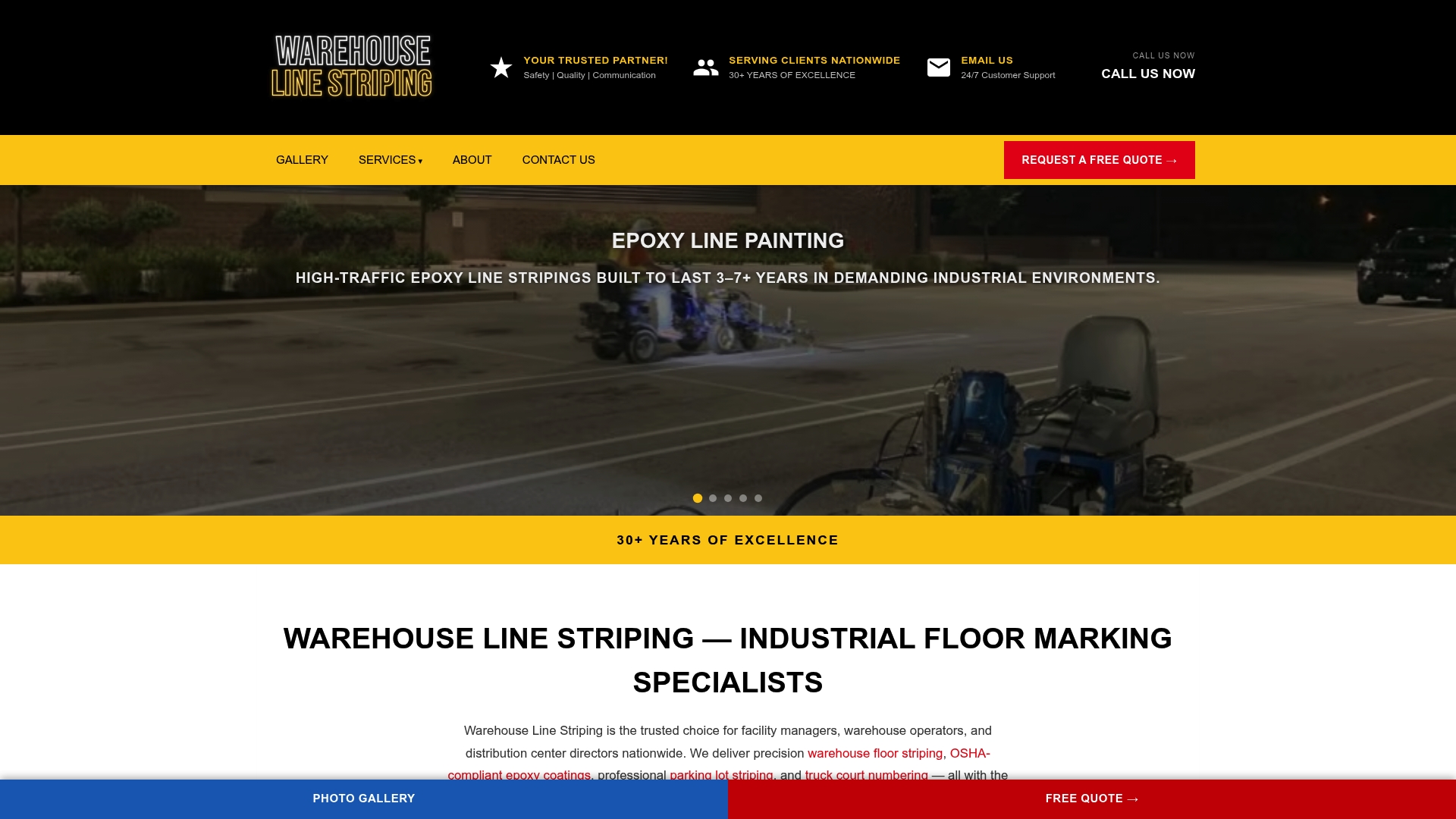
The team at Warehouse Line Striping designs custom dock layouts that cover every zone type covered in this guide, from dock edge hazard striping to pedestrian exclusion corridors and color-coded staging areas. Their floor marking systems for inventory flow guide covers how these systems integrate with warehouse management workflows in 2026. For facilities ready to build or rebuild a dock marking system that meets OSHA standards and holds up under daily use, Warehouse Line Striping offers 24/7 support and professional removal of outdated markings before new installation begins.
FAQ
What is the standard width for dock floor markings?
Four inches is the most common standard for forklift corridor and dock floor markings, providing clear visibility from a forklift operator’s seated position. Widths range from 2–6 inches depending on the zone type and traffic volume.
Does OSHA require specific colors for dock floor markings?
OSHA 1910.22© requires that aisles and passageways be appropriately marked but does not mandate specific colors. Facilities should adopt a consistent color coding system based on 5S standards to meet compliance and improve worker comprehension.
How long do dock floor markings last?
Epoxy paint lasts 3–7 years under normal industrial conditions. Adhesive floor marking tape lasts 1–3 years and requires more frequent replacement, particularly in high-traffic forklift zones.
When should I use tape instead of epoxy paint for dock markings?
Use tape for temporary or frequently reconfigured dock zones where layouts change seasonally or during operational pilots. Use epoxy paint for permanent boundaries like dock edges, fixed forklift corridors, and pedestrian exclusion zones.
What supplemental safety tools work alongside dock floor markings?
Blue Spot forklift technology projects a visible floor warning beam in high-noise dock environments where auditory alerts are ineffective. Pairing this technology with floor markings creates a multi-layered safety system that addresses both visual and auditory gaps.