How Floor Markings Support FIFO Systems in Warehouses
Floor markings are the primary visual control mechanism that enforces First In, First Out (FIFO) inventory rotation by making stock age physically visible at every pick point. Without marked inbound and outbound lanes, designated pallet positions, and color-coded storage zones, pickers default to grabbing the nearest item rather than the oldest. The result is stock aging, product expiration, and inventory write-offs that compound silently over time. This guide explains how floor markings support FIFO systems through specific standards, materials, and layout strategies that warehouse and facility managers can apply immediately.
How floor markings support FIFO systems through visual layout
FIFO implementation depends on three physical elements working together: layout, clear date labeling, and documented pick procedures. Floor markings are the foundation of the layout element. They physically separate where new stock enters from where old stock exits, making the rotation sequence impossible to ignore.
The core principle is directional flow. Older stock occupies the pick face, the side closest to the outbound lane. New stock loads from the opposite end. Floor markings define both ends of this channel with painted or taped boundaries, so the physical structure of the aisle enforces the rotation rule without requiring a picker to consult a system or remember a procedure.
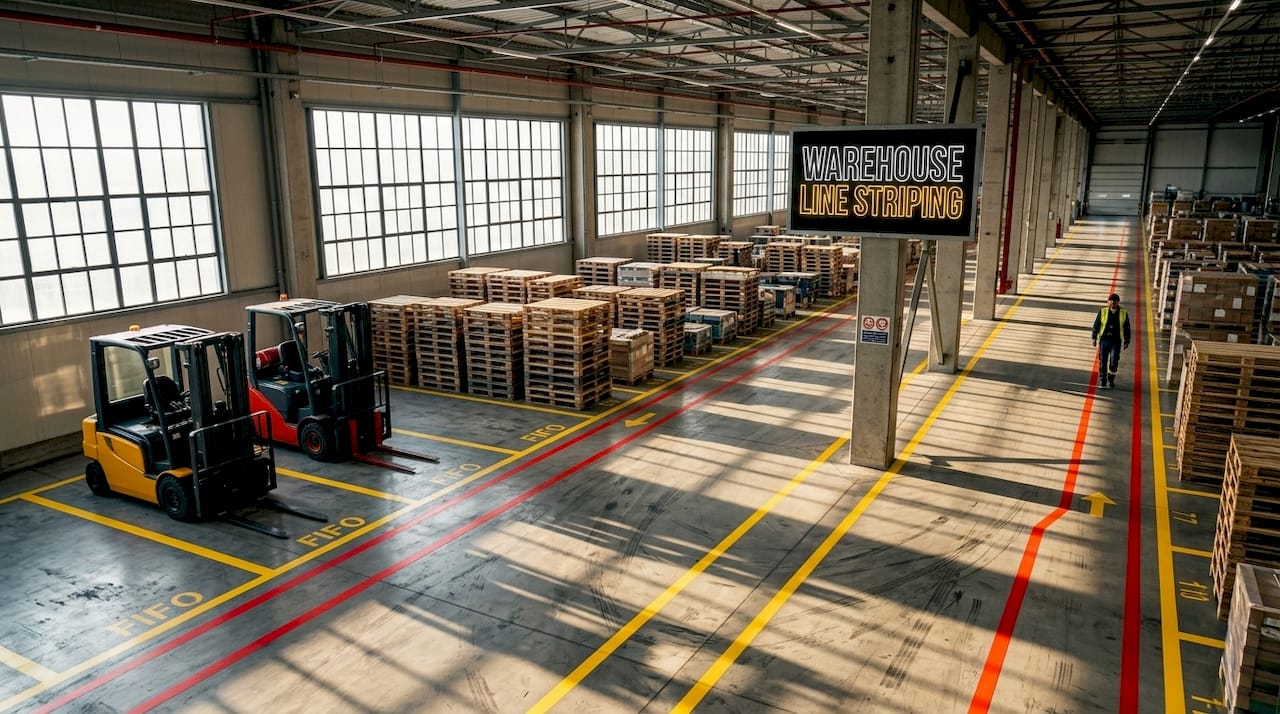
This matters because without visible stock age cues, pickers consistently select the most accessible item, not the oldest. A marked floor removes that ambiguity. The inbound zone is clearly bounded, the outbound zone is clearly bounded, and the direction of travel through the storage channel is unambiguous. FIFO compliance becomes a product of the physical environment rather than individual discipline.
Pro Tip: Map your current inventory flow on paper before marking the floor. Identify where new stock enters and where picks occur, then design your lane boundaries around that actual movement pattern rather than an idealized layout.
What floor marking standards optimize FIFO effectiveness?
Choosing the right line width, color system, and material is not an aesthetic decision. It directly determines whether forklift operators and pickers can read the floor under real operating conditions, including low light, pallet shadow, and high-speed travel.
Line width and visibility
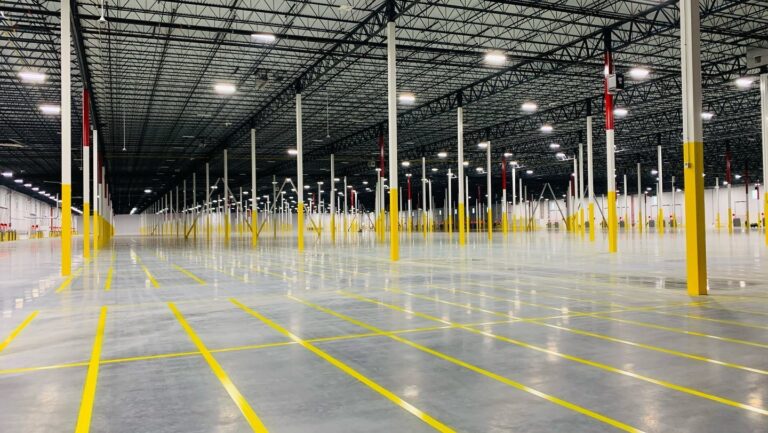
Most facilities use 4-inch lines for standard aisle marking and 6-inch lines for high-visibility boundaries such as forklift travel lanes and zone perimeters. These widths balance visibility with floor space efficiency. Narrower lines disappear under pallets and forklift tires. Wider lines consume usable floor area. For FIFO-specific zone boundaries, 6-inch lines are the correct choice because they remain visible even when partially obscured.
Color coding and consistency
Facility-wide color consistency prevents picking errors more effectively than strict adherence to any external color standard. A warehouse where yellow always means travel lane and green always means FIFO storage zone will outperform one that follows a published chart but applies it inconsistently across departments. Pick one system, document it, post it at every entry point, and enforce it without exception.
Tape vs. paint vs. epoxy
| Marking type | Cost per foot | Install time | Best use case |
|---|---|---|---|
| Vinyl tape | $0.15 to $0.40 | Hours | Changeable FIFO zones, pilot layouts |
| Paint | Low material cost | Days (cure time) | Semi-permanent aisles, low-traffic zones |
| Epoxy coating | Higher material cost | Days (cure time) | High-traffic forklift routes, permanent FIFO lanes |
Tape installs quickly and allows FIFO zone reconfiguration without downtime, which makes it the right choice when inventory flow patterns change seasonally or by product category. Epoxy and thermoplastic coatings are the correct choice for fixed, high-traffic forklift routes where tape would peel within weeks. The decision is not about preference. It is about matching material durability to actual traffic intensity.
Pro Tip: Use tape for your initial FIFO layout to validate the flow before committing to epoxy. Run the layout for 30 days, identify any friction points, then apply permanent markings based on real operational data.
How do floor markings function as a visual control system?
A well-designed floor marking system creates a closed loop that makes FIFO violations immediately visible to anyone on the floor, not just supervisors reviewing reports.
The closed-loop model works as follows:
- Inbound lanes are marked with a distinct color and boundary lines that signal “new stock only.” Receiving teams place pallets exclusively within these boundaries.
- Outbound lanes carry a separate color designation and connect directly to the pick face, signaling “oldest stock picks here first.”
- Pallet position outlines, sometimes called shadow markings, define exactly where each pallet sits within a storage channel. Shadow boards on the floor give an immediate visual signal when a pallet is missing or has been placed incorrectly, which prevents re-slotting errors that break FIFO sequence.
- Zone end markers use contrasting colors or hatching patterns to signal the boundary between inbound and outbound zones, preventing pallet mixing at the transition point.
The practical effect is significant. Pickers no longer need to cross-reference a WMS screen or ask a supervisor which pallet to pull. The floor tells them. This reduction in cognitive load also reduces pick errors, because the correct action is the obvious action.
Closed-loop visual controls with separate inbound and outbound lanes prevent the gradual stock mixing that degrades FIFO compliance over weeks and months. Gradual mixing is the most dangerous failure mode because it is invisible until a product expiration or audit forces a review.
Maintenance is the non-negotiable element of this system. Visual decay silently erodes FIFO discipline until the markings are so faded that workers stop registering them entirely. A quarterly inspection schedule with documented touch-up procedures is the minimum standard for any facility running FIFO.
What are the safety and efficiency benefits of maintained floor markings?
Clear floor markings do more than enforce inventory rotation. They are a primary safety control in any environment where forklifts and pedestrians share floor space.
Forklift operators traveling at speed rely on floor markings to identify travel lanes, pedestrian crossings, and storage zone boundaries. When those markings are crisp and consistent, operators make correct decisions at speed. When markings are faded or inconsistent, operators slow down, guess, or make errors. Each of those outcomes has a direct cost: reduced throughput, near-miss incidents, or collisions.
The safety and operational benefits of a well-maintained marking system include:
| Benefit | Operational impact |
|---|---|
| Defined forklift travel lanes | Reduces operator decision time and collision risk |
| Segregated pedestrian routes | Lowers pedestrian-forklift incident rates |
| Marked storage zone boundaries | Prevents unauthorized pallet placement that blocks FIFO flow |
| Shadow pallet positions | Reduces search time and re-slotting labor |
| Consistent color coding | Decreases pick errors across shifts and staff rotations |
Durable materials like thermoplastic and epoxy prevent the marker fading that causes silent FIFO breakdown in high-use zones. Facilities that invest in high-durability coatings on primary forklift routes see fewer marking failures between scheduled maintenance cycles, which translates directly to sustained FIFO compliance and lower accident rates.
Reviewing OSHA marking requirements alongside your FIFO layout design is worth doing before any marking project. OSHA 1910.22 requires that permanent aisles and passageways be appropriately marked, and FIFO lane boundaries that double as aisle markers satisfy both regulatory and operational requirements simultaneously.
How to implement floor marking strategies for FIFO compliance
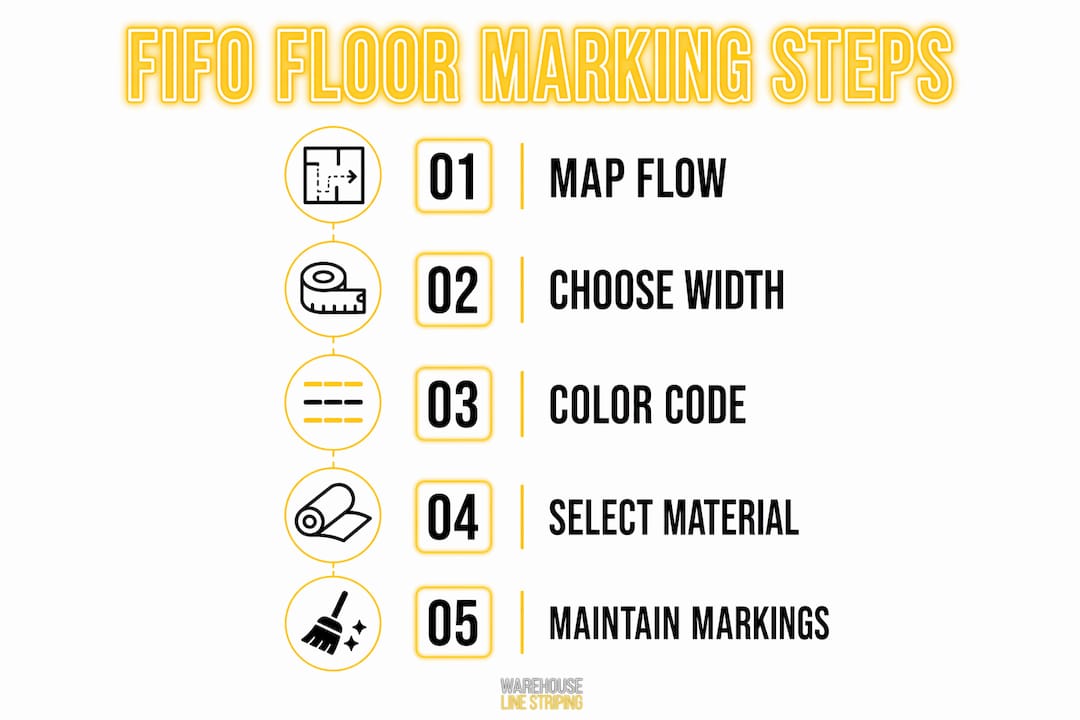
Improving FIFO through floor markings is a five-step process. Each step builds on the previous one, and skipping any step produces a system that works initially but degrades within months.
Audit current traffic patterns. Walk the floor during peak operating hours and document where forklifts travel, where pallets are placed outside designated zones, and where FIFO violations occur most frequently. This audit defines where markings are missing, faded, or incorrectly placed.
Select materials based on traffic intensity. Use the logistics facility striping guide as a reference for matching tape, paint, or epoxy to specific zones. Primary forklift travel lanes require epoxy or thermoplastic. Secondary storage zones can use heavy-duty vinyl tape if reconfiguration is likely.
Design a facility-wide color code. Assign specific colors to inbound lanes, outbound lanes, pedestrian routes, hazard zones, and equipment storage areas. Document the code in a one-page reference sheet and post it at every dock door and break room entrance. Train every shift, including temporary workers, on the system before they access the floor.
Apply markings with correct widths. Use 6-inch lines for all FIFO zone boundaries and forklift travel lanes. Use 4-inch lines for secondary aisle markings. Use shadow outlines at every designated pallet position within FIFO storage channels. Refer to pallet storage grid guidelines for exact positioning standards.
Schedule quarterly inspections and touch-ups. Assign a specific team member to inspect all FIFO-related markings every 90 days. Document findings, photograph faded sections, and schedule repairs within two weeks of identification. Maintaining bright and clear markings is a continual process that directly influences both safety and FIFO inventory integrity.
Key takeaways
Floor markings enforce FIFO compliance by making stock rotation physically visible through defined inbound and outbound lanes, shadow pallet positions, and consistent color coding maintained with durable materials.
| Point | Details |
|---|---|
| Visual layout enforces FIFO | Marked inbound and outbound lanes make stock rotation sequence physically unavoidable. |
| Line width affects compliance | Use 6-inch lines for FIFO zone boundaries and forklift lanes to maintain visibility under real conditions. |
| Material choice determines durability | Match epoxy or thermoplastic to high-traffic routes; reserve tape for zones subject to reconfiguration. |
| Color consistency beats color standards | A facility-wide code applied uniformly reduces pick errors more than following external charts. |
| Maintenance is non-negotiable | Quarterly inspections and documented touch-ups prevent the silent FIFO drift caused by visual decay. |
Why floor markings are the most undervalued FIFO tool
Most warehouse managers I work with focus their FIFO improvement efforts on WMS configuration, staff training, or receiving procedures. Those are all legitimate levers. But the floor is where FIFO either holds or breaks down, and it is consistently the last thing anyone looks at.
Here is what I have observed repeatedly: a facility can have a perfectly configured WMS and a well-trained team, and still experience chronic FIFO failures because the physical environment does not reinforce the procedure. When a picker is moving fast and the floor gives no clear signal about which pallet is oldest, they grab the nearest one. Every time. The WMS records the pick, the procedure says FIFO, but the outcome is not FIFO.
The facilities that sustain FIFO compliance over years, not just after an audit, are the ones that treat floor markings as a living system rather than a one-time installation. They inspect quarterly, they refresh faded lines before they disappear entirely, and they involve both operations and safety teams in layout decisions. That cross-functional input matters because a marking layout that works for inventory flow but creates a blind spot for forklift operators will eventually produce an incident.
The other thing most guides do not say: your first marking layout will not be your best one. Use tape for the initial FIFO zone design, run it for a full inventory cycle, and let the actual flow patterns tell you what to adjust. Then commit to epoxy on the routes that proved out. That sequence saves significant rework cost and produces a layout grounded in how your facility actually operates.
— ET
Get your FIFO floor markings done right the first time
If your current floor markings are faded, inconsistent, or were never designed with FIFO flow in mind, a professional installation is the fastest path to compliance and safety.
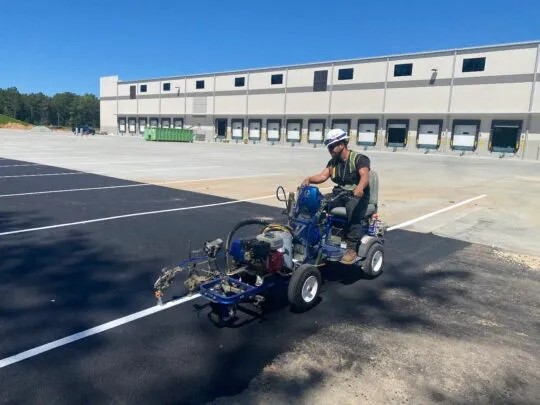
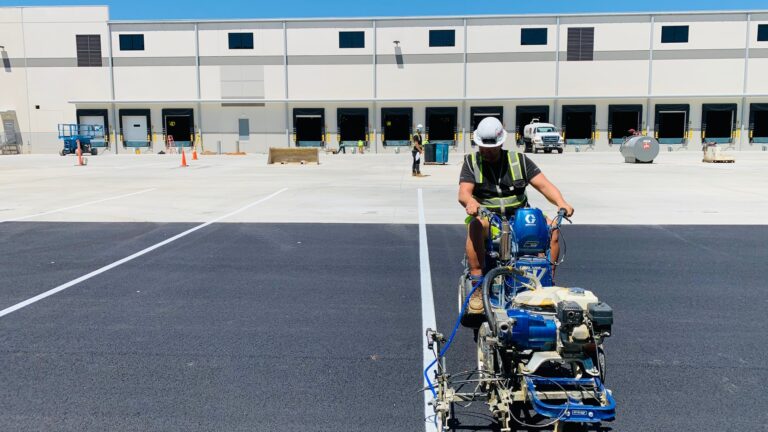
Warehouse Line Striping has completed over 10,000 floor marking projects across warehouses, distribution centers, and industrial facilities nationwide. Every project starts with a facility assessment to map actual traffic patterns and inventory flow before a single line is applied. Industrial-grade epoxy coatings last 3 to 7 years under heavy forklift traffic, and installations are scheduled to minimize operational downtime. From pallet storage grid layouts to full facility FIFO zone design, Warehouse Line Striping delivers markings built for the way your facility actually operates. Contact the team at warehouselines.com to schedule your assessment.
FAQ
What is the role of floor markings in a FIFO system?
Floor markings define the physical boundaries of inbound and outbound stock zones, making stock rotation sequence visible without requiring pickers to consult a system or remember a procedure. They are the primary visual control that prevents FIFO failure at the pick point.
What line width should I use for FIFO zone boundaries?
Use 6-inch lines for FIFO zone boundaries and primary forklift travel lanes, and 4-inch lines for secondary aisle markings. Wider lines remain visible under pallets and in low-light conditions where narrower lines disappear.
Should I use tape or epoxy for FIFO floor markings?
Use vinyl tape for zones that change seasonally or during layout pilots, and epoxy or thermoplastic for fixed, high-traffic forklift routes. Tape installs in hours with no cure time; epoxy requires downtime but lasts significantly longer under heavy use.
How often should FIFO floor markings be inspected?
Inspect all FIFO-related floor markings every 90 days and schedule repairs within two weeks of identifying faded or damaged sections. Visual decay erodes FIFO discipline gradually, and waiting for markings to disappear entirely before acting produces compliance gaps that are difficult to reverse.
Does color choice matter for FIFO floor markings?
Consistent application of your facility’s own color code matters more than matching any external standard. Assign specific colors to inbound lanes, outbound lanes, and pedestrian routes, then apply that system uniformly across every shift and department.