Floor Markings in Cold Storage: A Manager’s Guide
Floor markings in cold storage are defined as permanent or semi-permanent visual indicators applied to facility floors to direct traffic, designate work zones, and identify hazards in temperature-controlled environments. The role of floor markings in cold storage goes far beyond simple organization. In freezer warehouses and refrigerated distribution centers, these systems prevent forklift-pedestrian collisions, support OSHA compliance, and keep product flow moving efficiently under conditions that challenge every material you put on the floor. Getting them right requires a different approach than standard warehouse marking.
How do floor markings improve safety in cold storage?
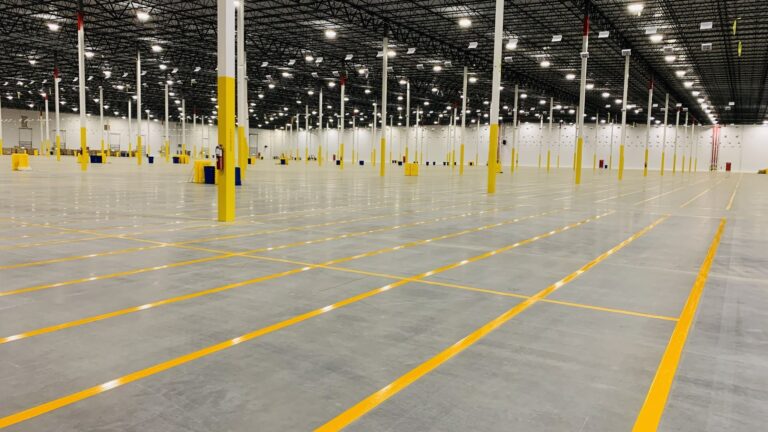
Floor markings are the first line of defense against traffic-related incidents in cold storage facilities. Forklifts and pedestrians share tight aisles in low-visibility, low-temperature environments where reaction time is reduced and surfaces can be slick. Clear visual separation between pedestrian walkways and forklift lanes removes the guesswork that causes collisions.
The numbers support this directly. Facilities with floor marking systems report up to 35% fewer navigation-related incidents. That reduction translates to fewer injury reports, lower workers’ compensation costs, and less unplanned downtime.
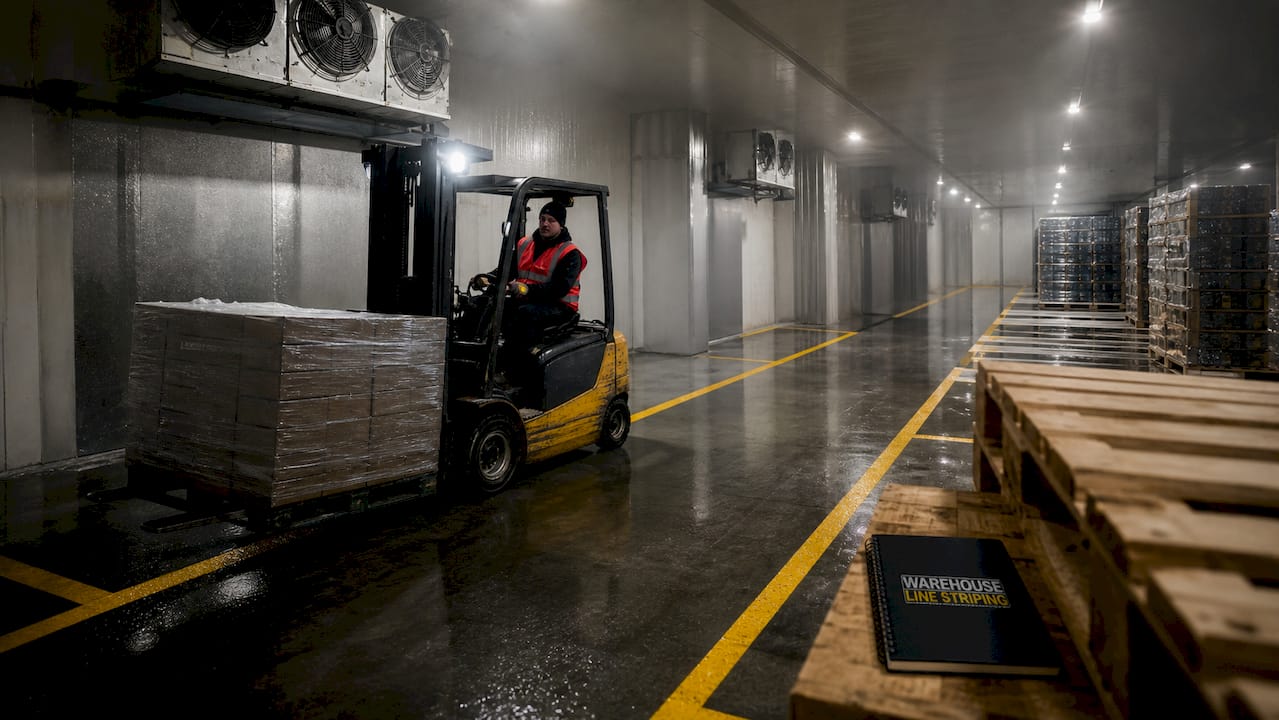
Hazard identification is equally critical. Red markings designate fire equipment access and emergency exits. Yellow marks warn of physical hazards like dock edges and floor-level obstructions. These color conventions follow OSHA’s visual management standards, and they work because every worker recognizes them without training refreshers.
The compliance stakes are real. Failing to mark aisles and passageways can result in OSHA citations with fines up to $16,550 per serious violation. One inspection finding in an unmarked cold storage facility can cost more than a complete floor marking installation. The math is straightforward.
Key safety functions floor markings serve in cold storage:
- Forklift lane separation keeps powered equipment out of pedestrian zones
- Hazard zone identification flags dock edges, low-clearance areas, and chemical storage
- Emergency pathway marking keeps exit routes visible even in low-light freezer conditions
- Staging area boundaries prevent product from blocking aisles during receiving and shipping
Pro Tip: Use high-contrast color combinations like yellow on dark concrete rather than white, since condensation and frost can wash out low-contrast markings faster in freezer environments.
What materials work best for sub-zero floor markings?
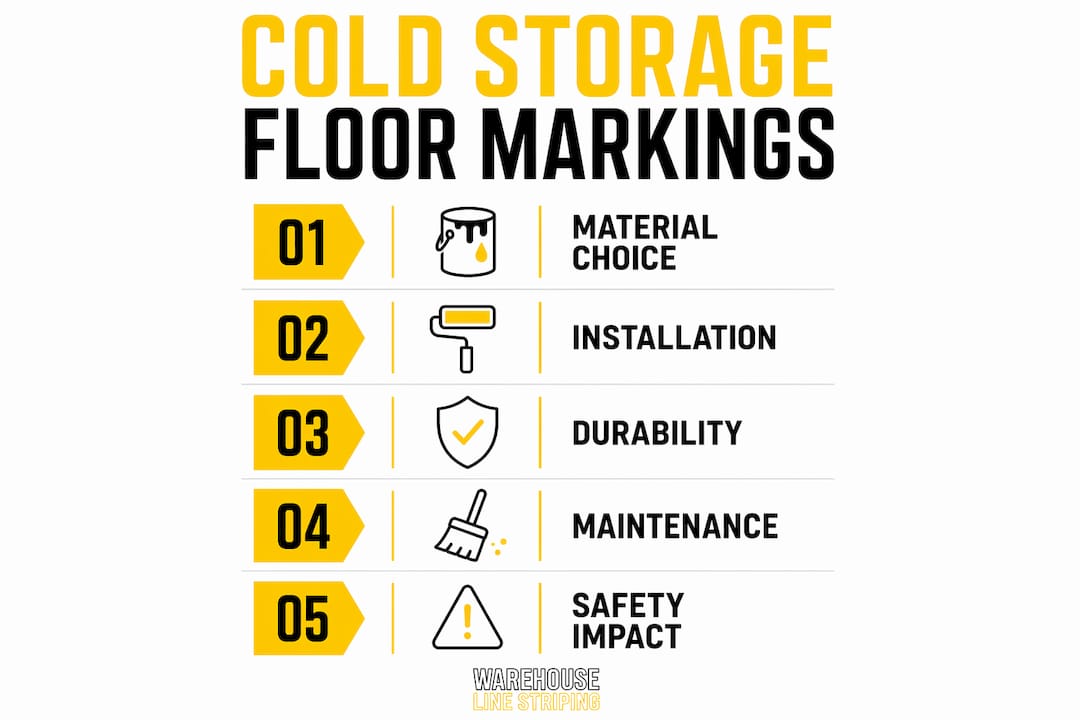
The material you choose for cold storage floor marking determines how long your system lasts and how much disruption the installation causes. Three primary options exist: cold-rated adhesive tapes, specialized polyurethane or polyaspartic coatings, and LED line projectors.
| Method | Temperature Range | Install Downtime | Durability | Best Use Case |
|---|---|---|---|---|
| Cold-rated adhesive tape | Down to -40°F | Minutes, zero downtime | 1–3 years | Active freezers, quick changes |
| Polyurethane/polyaspartic coating | Sub-zero cycling | 24–48 hr shutdown | 3–7 years | Long-term permanent layouts |
| LED line projectors | Any temperature | Minimal | Indefinite | Unmarkable or wet floors |
Cold storage tapes with rubber-based adhesives stay flexible at sub-zero temperatures and allow installation without shutting down refrigeration. Standard paint requires 12–24 hours of curing time at room temperature. That difference matters enormously when you are managing a facility that cannot afford extended downtime.
Standard epoxy coatings are not suitable for freezer floors. Epoxy becomes brittle below its glass transition temperature, causing cracking and delamination within months. Specialized two-pack polyurethane or polyaspartic systems remain flexible through repeated freeze-thaw cycles and bond properly to concrete that experiences thermal movement.
Ceiling-mounted LED projectors offer a contamination-free alternative where floors are too wet or uneven for physical markings. These units project lane lines and zone boundaries directly onto the floor surface. They survive sanitation washdowns, require no floor preparation, and can be repositioned when layouts change. Brady ID documents this solution specifically for refrigerated food production facilities where hygiene standards make adhesive products impractical.
Pro Tip: For facilities that mix freezer and cooler zones, use tape in active freezer areas for flexibility and apply polyurethane coatings in cooler zones where longer-term durability justifies the installation shutdown.
How to plan and install a floor marking system in cold storage
A reliable floor marking system in cold storage starts with planning before any material touches the floor. Skipping preparation steps is the single most common reason markings fail within the first year.
Audit your current layout. Map all forklift routes, pedestrian paths, storage zones, and emergency exits before selecting colors or materials. This step reveals conflicts in your traffic flow that markings alone cannot fix. Reviewing floor marking systems for inventory flow at this stage helps you align your marking plan with product movement patterns.
Assess floor condition. Poor floor conditions such as cracks or unevenness undermine marking adhesion regardless of material used. Repair cracks and level uneven sections before installation. A smooth, nonporous surface is not optional. It is the foundation everything else depends on. See why floor flatness matters before committing to a coating system.
Measure and control moisture. Surface moisture must be below 5% before applying any coating or tape. Use a digital moisture meter to verify readings across multiple points on the floor. Moisture above this threshold causes delamination within weeks.
Schedule the warm-up period. Cold storage floors must reach above 5–10°C before coatings can bond properly. This requires a refrigeration shutdown of 24–48 hours. Plan this around your lowest-volume operational window to minimize product loss and disruption.
Apply primer before coatings. Epoxy primers seal concrete pores and create a mechanical bond that prevents moisture from migrating up through the slab after the facility returns to operating temperature. This step is especially critical in facilities with older concrete.
Establish an inspection schedule. Walk the floor marking system monthly. Look for lifting tape edges, faded color, and cracking in coated areas. Catching failures early prevents small repairs from becoming full reinstallations.
Integrating floor markings into lean operations at the planning stage pays dividends. Effective floor marking programs are integral to lean manufacturing and continuous improvement, embedding visual standards that reduce waste and improve operational flow. When your markings align with your pick paths, FIFO lanes, and staging areas, every worker can navigate without supervision.
What challenges threaten floor marking longevity in cold storage?
Cold storage environments attack floor markings from multiple directions simultaneously. Understanding each threat helps you choose the right material and maintenance strategy before problems appear.
Condensation and moisture infiltration are the most destructive forces. When a facility warms up for maintenance or product loading, moisture condenses on cold surfaces and works under tape edges and coating seams. This is why surface moisture control before installation is non-negotiable, and why ongoing drainage and humidity management extend marking life significantly.
Thermal movement causes concrete slabs to expand and contract with temperature cycling. Rigid coatings like standard epoxy crack at the joints where movement concentrates. Polyurethane and polyaspartic systems flex with the slab. Tape products handle thermal movement better than rigid coatings but require more frequent edge inspection.
Sanitation and cleaning chemicals degrade adhesives and coatings over time. High-pressure washdowns common in food-grade cold storage facilities are particularly aggressive. Selecting tape products rated for chemical resistance and coatings with food-safe topcoats extends service life considerably.
Practical solutions that extend floor marking life in cold storage:
- Use cold-rated rubber-based adhesive tapes rated for the specific temperature range of your facility
- Apply anti-slip additives to coated markings in areas prone to ice or condensation buildup
- Schedule quarterly edge sealing on tape installations to prevent moisture infiltration
- Consider LED projectors in high-moisture zones where no physical marking survives sanitation cycles
- Document marking condition with photos at each inspection to track degradation patterns over time
The combination of the right material, proper surface preparation, and a consistent maintenance schedule is what separates a floor marking system that lasts three to five years from one that fails in six months.
Key takeaways
Floor markings in cold storage require specialized materials, careful surface preparation, and a maintenance schedule to deliver lasting safety and compliance results.
| Point | Details |
|---|---|
| Safety impact is measurable | Facilities with marking systems report up to 35% fewer navigation-related incidents. |
| Material choice is critical | Standard epoxy fails in freezers; use cold-rated tape or polyurethane coatings instead. |
| Surface prep determines longevity | Moisture below 5% and floor temperatures above 5°C are required before any coating application. |
| OSHA fines are significant | Missing aisle markings can trigger violations with fines up to $16,550 per serious finding. |
| LED projectors solve hard cases | Ceiling-mounted projectors work where physical markings fail due to moisture or sanitation demands. |
What i’ve learned working in temperature-controlled facilities
The biggest mistake I see facility managers make is treating cold storage floor marking as a one-time project rather than an ongoing system. They invest in a solid installation, skip the monthly inspections, and then wonder why they are replacing tape every eight months instead of every three years.
The second most common mistake is choosing materials based on upfront cost rather than total cost of ownership. Cold-rated tape costs more per roll than standard warehouse tape. But when standard tape fails in a freezer within 60 days and cold-rated tape lasts 18 months, the math reverses quickly. I have watched facilities cycle through three tape installations in the time a properly specified polyurethane coating would have lasted.
LED projectors still get dismissed as a niche solution, but I think they are underused. In facilities with aggressive sanitation protocols or floors that are genuinely unmarkable due to moisture, projectors eliminate an entire category of maintenance headaches. The upfront cost is higher, but the ongoing cost is nearly zero.
The facilities that get this right share one habit: they review their floor marking layout every time they change their operational layout. Markings that guided traffic efficiently two years ago may now conflict with new racking configurations or pick path changes. A floor marking system that no longer matches your operation is not just inefficient. It is a safety liability.
— ET
Get your cold storage floor markings done right
Cold storage floor marking requires more than paint and tape. It requires the right materials, proper surface preparation, and a layout built around how your facility actually operates.
Warehouse Line Striping has completed over 10,000 floor marking projects across warehouses, distribution centers, and temperature-controlled facilities nationwide. Their team handles everything from moisture testing and surface prep to OSHA-compliant layout design and installation, with 24/7 support and minimal disruption to your operations. Whether you need cold-rated tape systems, polyurethane coatings, or a full inventory flow marking system, Warehouse Line Striping delivers solutions built to last in the harshest environments. Find professional marking services near you and get your facility inspection scheduled today.
FAQ
What is the role of floor markings in cold storage?
Floor markings in cold storage direct forklift and pedestrian traffic, designate hazard zones, and support OSHA compliance in temperature-controlled environments. They reduce navigation-related incidents by up to 35% and prevent costly regulatory violations.
What floor marking materials work in freezer environments?
Cold-rated rubber-based adhesive tapes and specialized polyurethane or polyaspartic coatings are the correct choices for freezer floors. Standard epoxy becomes brittle below its glass transition temperature and cracks under sub-zero temperature cycling.
How do i prepare a cold storage floor for markings?
The floor surface must reach above 5–10°C and have moisture content below 5% before any coating or tape application. This typically requires a 24–48 hour refrigeration shutdown and verification with a digital moisture meter.
Can floor markings survive sanitation washdowns in cold storage?
Chemical-resistant tape products and food-safe topcoated coatings can withstand regular washdowns. For facilities with the most aggressive sanitation protocols, ceiling-mounted LED projectors provide a washdown-proof alternative with no physical floor contact.
How often should cold storage floor markings be inspected?
Monthly inspections are the standard for cold storage floor markings. Check for lifting tape edges, faded color, and coating cracks, and document findings with photos to track degradation patterns and schedule repairs before full system failure occurs.