Floor Marking Systems for Inventory Flow: 2026 Guide
Floor marking systems for inventory flow are the physical infrastructure that controls how people, equipment, and goods move through a warehouse. OSHA’s 29 CFR 1910.176(a) requires permanent aisles and passageways to be appropriately marked, though it specifies no particular colors, widths, or materials. That flexibility is both an opportunity and a trap. Facilities that treat floor markings as an afterthought end up with patchwork systems that confuse workers and slow inventory movement. The right approach combines material selection, workflow mapping, and lifecycle planning into a single coordinated system. Brands like Mighty Line and Jessup Manufacturing have built entire product lines around this challenge, and the difference between their industrial-grade solutions and basic paint is measurable in years of service life.
1. Floor marking systems for inventory flow: the top 10 materials and methods
The ten systems below represent the full spectrum of warehouse floor marking, from budget tape to specialty coatings. Each has a specific role in a well-designed facility.
PVC floor tape
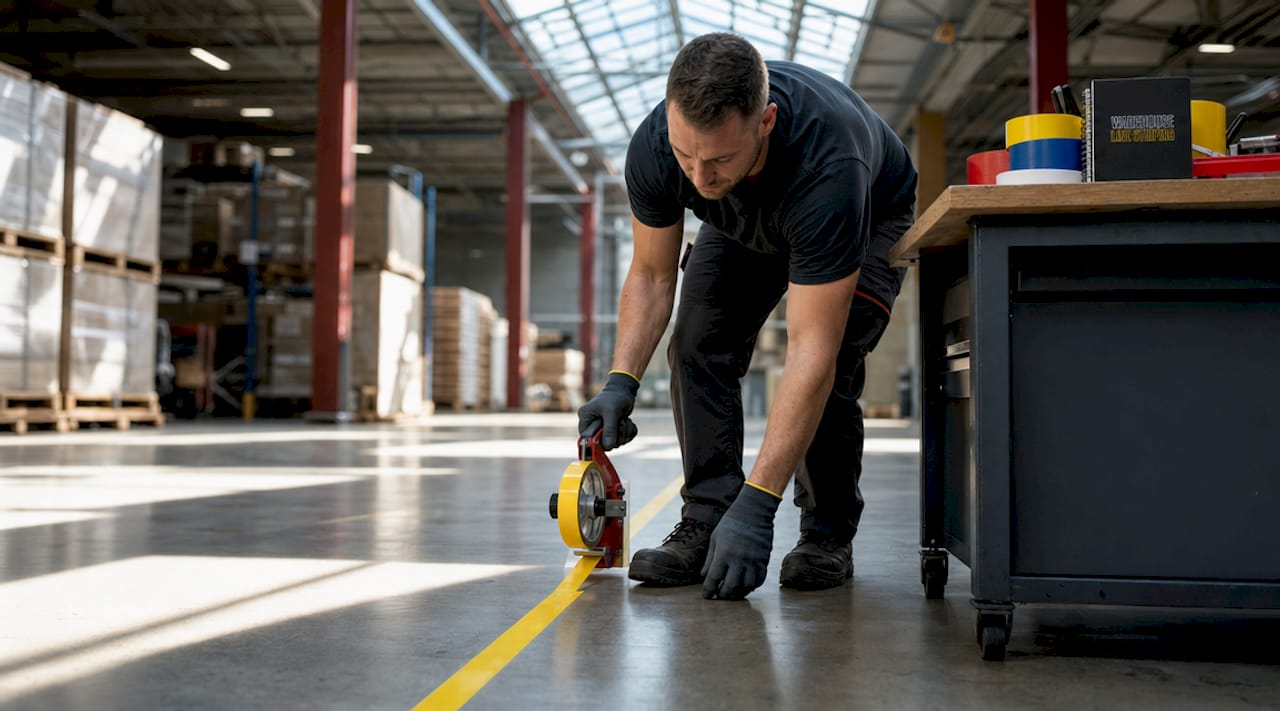
PVC tape is the most widely deployed marking system in warehouses today. Brands like Mighty Line produce industrial-grade tape with beveled edges and aggressive adhesives that resist forklift peeling and hold up to cleaning equipment. Standard PVC tape suits light to medium traffic aisles, pedestrian zones, and staging lanes where layouts change seasonally. Lifespan runs one to three years depending on traffic volume.
Polyester and rubber-adhesive tape
Polyester tape offers higher tensile strength than standard PVC, making it better suited for areas where forklifts make sharp turns. Rubber-adhesive formulas bond more aggressively to concrete and resist moisture better than acrylic alternatives. Both formats support zero-downtime installation, which is the defining advantage of tape over paint or epoxy. You apply it, and the floor is operational immediately.
Pro Tip: Apply tape to a clean, dry floor at temperatures above 50°F. Cold concrete reduces adhesive bond strength and accelerates edge lifting under forklift traffic.
Water-based floor paint
Water-based floor paint is the entry-level option for facilities with light foot traffic and minimal forklift activity. Application is fast, cost is low, and color options are unlimited. The tradeoff is durability. Paint wears through quickly on high-traffic routes and requires reapplication every six to eighteen months. It works well for staging zones, overflow storage areas, and facilities that repurpose space frequently.
Solvent-based floor paint
Solvent-based formulas penetrate concrete more deeply than water-based alternatives, producing a harder finish with better abrasion resistance. They suit medium-traffic aisles and loading dock aprons where some forklift activity occurs. Cure time runs longer than water-based paint, typically 24 hours before foot traffic and 48 to 72 hours before forklift access.
Two-part epoxy floor coatings
Two-part epoxy is the standard for high-traffic warehouse environments. Foot traffic resumes after 24 hours, forklifts after approximately seven days, and full chemical resistance develops around 14 days. That cure window requires planned downtime, which is the primary operational cost. The payoff is a surface that lasts five to ten years under constant forklift traffic and resists most cleaning chemicals.
Polyaspartic coatings
Polyaspartic coatings cure faster than standard epoxy, often reaching forklift-ready status within 24 hours rather than seven days. They also resist UV yellowing, which matters in facilities with skylights or open dock doors. The material cost runs higher than epoxy, but the reduced downtime often justifies the premium for facilities that cannot afford extended shutdowns.
Urethane cement coatings
Urethane cement is the correct choice for cold storage, food processing, and freezer environments where thermal cycling would crack standard epoxy. It bonds to damp concrete, tolerates temperatures as low as negative 40°F, and resists the steam cleaning common in food-grade facilities. No other coating system matches its performance in those specific conditions.
Chemical-resistant epoxy topcoats
Battery charging stations and chemical storage zones require specialized epoxy topcoats that resist acid, alkali, and solvent exposure. Standard epoxy fails in these zones within months. Chemical-resistant formulas use modified resin systems that maintain adhesion and color integrity even under repeated chemical contact. Mark these zones with a distinct color to signal the hazard to forklift operators.
Combo tape-and-epoxy systems
Some facilities use epoxy as the base floor coating and tape as the marking layer applied on top. This approach gives you the durability of epoxy underfoot while preserving the reconfigurability of tape for aisle and zone boundaries. It suits distribution centers that run seasonal inventory programs requiring quarterly layout changes. The epoxy protects the concrete; the tape defines the workflow.
Photoluminescent and reflective tape
Photoluminescent tape absorbs ambient light and glows in low-light or power-outage conditions. Reflective tape amplifies forklift headlights and overhead lighting to improve visibility during night shifts. Both formats serve as supplements to primary marking systems rather than standalone solutions. They are particularly effective at dock doors, pedestrian crossings, and emergency exit paths where visual clarity is critical.
2. How to design a coordinated floor marking system
A well-designed floor marking system requires cross-functional input and workflow mapping before a single line is applied. Skipping this step produces reactive markings that fail as operations evolve.
Follow this sequence before installation:
- Map actual movement patterns. Document how people, materials, vehicles, and goods move through the facility. Walk the floor during peak shifts, not during planning meetings.
- Identify permanent versus variable zones. Permanent aisles, fire exits, and hazard boundaries get epoxy or paint. Staging lanes, overflow zones, and seasonal pick paths get tape.
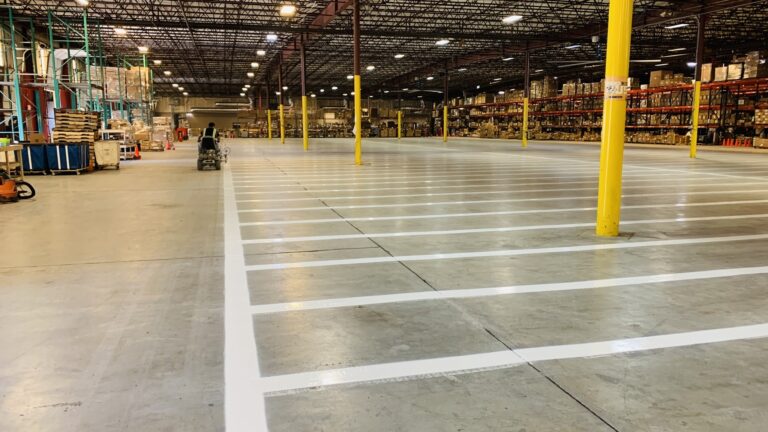
- Assign a color system and commit to it. Yellow for traffic aisles, white for work areas, red for hazards, and green for finished goods are common conventions. Consistency across the facility is more important than which colors you choose.
- Mark forklift turning zones explicitly. Failing to mark turning radii leads to operator drift and collisions where paths converge. These are the highest-risk points in any warehouse floor layout.
- Include pedestrian crossings at every aisle intersection. Pick path markings that separate foot traffic from forklift routes reduce near-miss incidents significantly.
- Plan installation around cure times. Epoxy and paint systems need substrate preparation and cure windows. Schedule installations during planned maintenance shutdowns to avoid operational disruption.
Pro Tip: Photograph your floor before installation and after every major layout change. A visual record lets you identify drift patterns and plan the next update before markings degrade to the point of confusion.
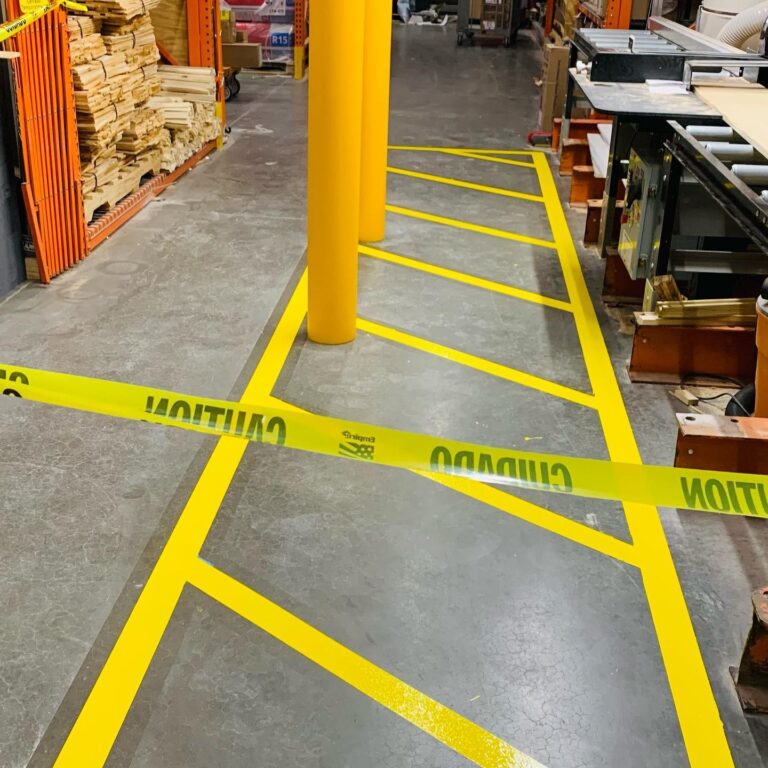
Mixing temporary barricade colors with permanent operational markings is one of the most common design failures in warehouse environments. When temporary and permanent markings share visual language, workers begin ignoring important warnings over time. Keep temporary markings visually distinct, and remove them the moment they are no longer needed.
3. Tape vs. paint vs. epoxy: a direct comparison
The three primary marking methods differ significantly across the metrics that matter most to facility managers.
| Factor | Tape | Paint | Epoxy |
|---|---|---|---|
| Installation downtime | Zero | 24 to 48 hours | 7 days for forklifts |
| Lifespan (heavy traffic) | 1 to 3 years | 6 to 18 months | 5 to 10 years |
| Reconfigurability | High | Low | Very low |
| Chemical resistance | Low to medium | Low | High |
| Cold storage suitability | High (flexible tape) | Low | Low (use urethane cement) |
| Material cost | Low to medium | Low | Medium to high |
| Labor cost | Low | Low | High |
Tape wins on flexibility and speed. Epoxy wins on durability and chemical resistance. Paint occupies a middle ground that suits light-duty applications where budget is the primary constraint. For most high-volume distribution centers, the answer is a combination: epoxy for permanent high-traffic routes and tape for variable zones.
4. Situational recommendations by warehouse condition
The right marking system depends on your specific environment. Here is how to match material to condition:
- High-traffic forklift routes: Two-part epoxy with an aggregate broadcast for slip resistance. This is the only system that holds up to constant forklift traffic without annual reapplication.
- Cold storage and freezer environments: Urethane cement coatings for painted zones; flexible rubber-adhesive tape for areas requiring reconfiguration. Standard epoxy cracks under thermal cycling.
- Facilities with frequent layout changes: Thick industrial tape from brands like Mighty Line. The beveled edge profile resists peeling under forklift tires, and the system can be updated without grinding or surface prep.
- Battery charging and chemical storage zones: Chemical-resistant epoxy topcoats are non-negotiable. Standard coatings fail within months in these environments.
- Light-traffic staging and overflow zones: Water-based paint or standard PVC tape. These areas do not justify the cost of epoxy, and their layouts change often enough that reconfigurability matters more than longevity.
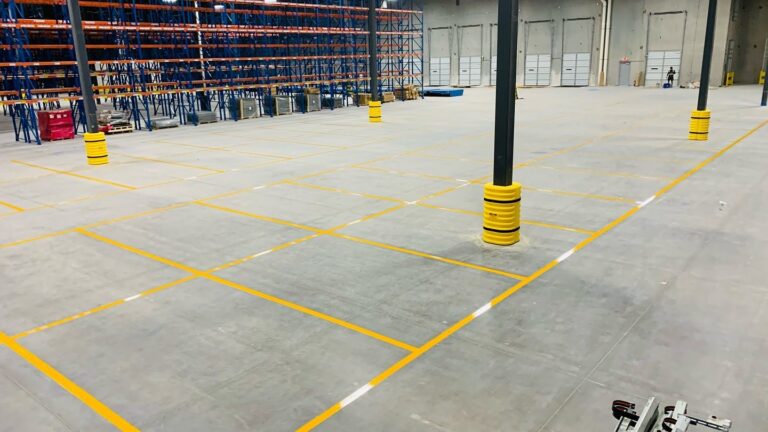
- Pallet storage grids: Coordinated pallet grid markings using durable tape or epoxy paint define storage positions precisely and reduce misplacement errors during receiving and putaway.
Replace any marking once 25% of its surface is damaged or faded. That threshold is the industry standard for when legibility degrades enough to affect worker behavior and safety compliance.
Key takeaways
The most effective floor marking systems for inventory flow combine the right material for each zone, a consistent color system, and a lifecycle plan that schedules updates before markings fail.
| Point | Details |
|---|---|
| Match material to environment | Use epoxy for heavy forklift routes, urethane cement for cold storage, and tape for flexible zones. |
| Map workflow before marking | Document actual movement patterns before installation to avoid reactive, patchwork systems. |
| Maintain a consistent color system | Color consistency across the facility matters more than which specific colors you choose. |
| Replace at 25% degradation | Inspect markings regularly and replace when 25% of the surface is damaged or faded. |
| Separate temporary from permanent | Keep temporary barricade markings visually distinct from permanent operational markings to preserve safety discipline. |
What I’ve learned from watching floor marking systems fail
The most common mistake I see in warehouses is treating floor markings as a one-time installation rather than a living system. Operations change. Inventory programs shift. New equipment arrives with different turning radii. The floor markings stay the same. Within 18 months, the marks no longer reflect how the facility actually operates, and workers stop trusting them.
The second failure mode is forklift turning zones. Facilities mark straight aisles precisely and then leave the intersection zones unmarked. That is exactly where operator drift happens. Forklifts cut corners, pedestrians assume the path is clear, and near-misses accumulate. Marking turning radii explicitly is one of the highest-value interventions you can make in any warehouse floor layout.
I have also watched facilities undermine their own safety culture by leaving temporary construction markings in place for months. Workers see yellow tape everywhere and stop distinguishing between “this is a permanent pedestrian crossing” and “this was a temporary barrier from last quarter’s renovation.” The visual language loses meaning. That erosion is harder to fix than a worn-out floor line.
The facilities that get this right treat floor layout best practices as an operational discipline, not a facilities task. They schedule marking inspections quarterly, sync major updates with planned downtime, and involve operations supervisors in every layout change. The floor becomes a communication tool that workers trust because it is always accurate.
— ET
Get a floor marking system built for your operation
Warehouse Line Striping has completed over 10,000 floor marking installations across warehouses, distribution centers, and industrial facilities nationwide. Every project starts with a workflow assessment, not a materials quote. The team maps your actual inventory flow, identifies high-risk zones, and designs a system that meets OSHA requirements while supporting your specific operational needs. From lean operations support to staging area workflows, Warehouse Line Striping delivers installations using industrial-grade epoxy coatings that last three to seven years, backed by 24/7 customer support and professional removal of outdated markings. Contact Warehouse Line Striping to schedule a facility assessment.
FAQ
What does OSHA require for warehouse floor markings?
OSHA 29 CFR 1910.176(a) requires permanent aisles and passageways to be appropriately marked but does not specify colors, widths, or materials. Facilities have full discretion over their marking system as long as markings are maintained and clearly visible.
How long does floor marking tape last in a warehouse?
Industrial-grade PVC or polyester tape typically lasts one to three years in warehouse environments, depending on forklift traffic volume and cleaning frequency. Replace tape when 25% of the marking surface is damaged or faded.
When should I use epoxy instead of tape for floor markings?
Use epoxy for permanent, high-traffic forklift routes where tape would wear through within months. Epoxy requires forklifts to stay off the surface for approximately seven days after application but delivers five to ten years of service life under heavy use.
What floor marking system works best in cold storage?
Urethane cement coatings are the correct choice for freezer and cold storage environments because they bond to damp concrete and tolerate extreme temperature cycling. Flexible rubber-adhesive tape works for zones that require reconfiguration within cold storage areas.
How do I prevent floor markings from becoming confusing over time?
Maintain a consistent color system, remove temporary markings immediately after their purpose ends, and inspect the full floor layout quarterly. Markings added reactively without a system plan tend to undermine safety and flow discipline as operations evolve.