Distribution Center Traffic Study: A Logistics Guide
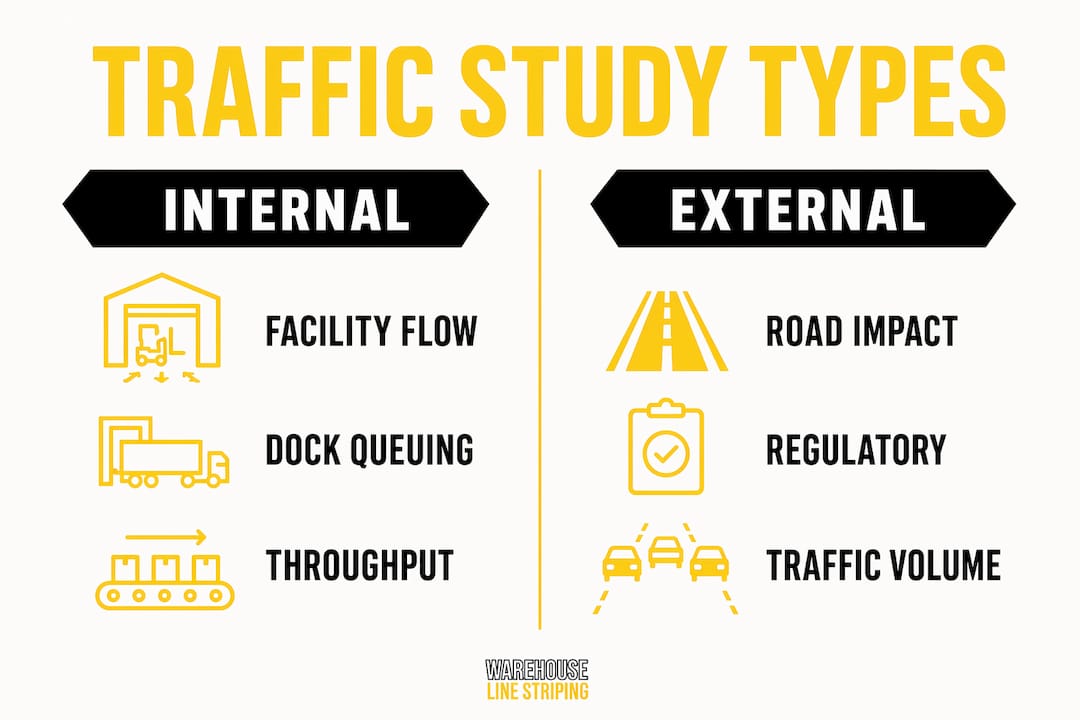
A distribution center traffic study is a formal analysis of how trucks, materials, and people move within or around a distribution facility to improve operational efficiency and traffic safety. Two distinct study types exist: internal traffic logistics studies, which examine vehicle and product circulation inside the facility, and external Traffic Impact Assessments (TIAs), which measure effects on public roads and intersections. Logistics professionals who confuse these two types risk commissioning the wrong deliverable entirely. Frameworks like the ITE Trip Generation Manual, TxDOT guidelines, and methodologies developed by firms such as Shive-Hattery and TJW Engineering define the standard practice for both study types.
What is a distribution center traffic study?
A distribution center traffic study evaluates movement patterns inside or around a facility to identify inefficiencies, safety risks, and capacity constraints. The term covers two fundamentally different scopes, and selecting the right one determines whether the study produces useful results.
Internal traffic logistics studies focus on what happens inside the fence line. They map how trucks enter dock areas, how product moves through receiving and shipping, and where queues form. External Traffic Impact Assessments focus on the public road network. They quantify how a facility’s vehicle trips affect nearby intersections, signal timing, and lane capacity.

Both study types share a common goal: replace guesswork with data. The difference lies in where that data is collected and who uses the findings. Internal studies serve operations managers and facility engineers. External TIAs serve city planners, permitting agencies, and transportation departments.
How does an internal traffic logistics study work?
An internal traffic logistics study examines how vehicles and materials circulate inside a distribution center to locate where time is lost and throughput is constrained. These studies analyze truck routing, dock access, queue management, internal roadways, turning movements, and parking or waiting areas. The goal is operational improvement, often without major capital expenditure.
Typical components of an internal traffic logistics study include:
- Truck routing and internal road geometry: Are turning radii adequate for 53-foot trailers? Do one-way loops prevent conflicts?
- Dock access and queue management: How many trucks wait before a dock door opens? Where do they stage?
- Shipping and receiving separation: Are inbound and outbound flows physically separated to prevent congestion?
- Parking and waiting areas: Is there sufficient space for trucks to hold without blocking active lanes?
- Rail interactions: For facilities with rail spurs, how do rail car movements intersect with truck traffic?
- Pedestrian and forklift crossings: Where do foot traffic and powered equipment paths intersect?
Traffic logistics studies locate where time is lost in product flow and recommend operational changes that improve throughput without requiring new construction. That makes them high-value studies for facilities facing throughput pressure but limited capital budgets.
Pro Tip: Dock queueing is the single most common bottleneck identified in internal studies. Before commissioning a full study, count how many trucks are staged outside dock doors during your peak shift. If that number exceeds two per active dock, you already have evidence of a queuing problem worth quantifying.
Understanding your distribution center flow path before the study begins gives engineers a baseline that shortens data collection time significantly.
How does an external traffic impact assessment differ?
A Traffic Impact Assessment is a regulatory document that quantifies how a proposed or expanded distribution center affects the surrounding public road network. TIAs analyze proposed developments using metrics such as delay, level of service (LOS), and queue length, supported by traffic simulation and data including trip generation and distribution. They separate project-generated impacts from background traffic growth to produce proportionate mitigation recommendations.
The following steps describe a standard TIA workflow:
- Define the study area. Identify which intersections and road segments the facility’s traffic will affect.
- Collect baseline traffic data. Conduct turning movement counts, approach speed measurements, and crash data reviews at study intersections.
- Generate trip estimates. Use the ITE Trip Generation Manual to estimate the number of vehicle trips the facility produces during peak hours.
- Assign trip distribution and routing. Determine which roads those trips will use based on origin-destination patterns.
- Model existing and future conditions. Run traffic simulation software to calculate LOS, delay, and queue lengths under current and projected volumes.
- Identify impacts. Compare future conditions with and without the project to isolate project-generated effects.
- Develop mitigation measures. Recommend signal timing changes, turn lane additions, or access modifications proportional to the identified impact.
The table below compares the two study types directly:
| Feature | Internal Traffic Logistics Study | External Traffic Impact Assessment |
|---|---|---|
| Focus area | Inside the facility fence line | Public roads and intersections |
| Primary user | Operations managers, facility engineers | City planners, permitting agencies |
| Key metrics | Queue lengths, dock utilization, routing efficiency | LOS, delay, trip generation, crash data |
| Regulatory role | Operational improvement tool | Required for development permits |
| Primary data source | On-site observation, simulation | Traffic counts, ITE Manual, crash records |
TIAs support regulatory compliance by quantifying development effects on public road infrastructure using defensible, simulation-based methodologies. Permitting agencies in most jurisdictions require a completed TIA before approving a new distribution center or a significant expansion.
When should a distribution center conduct a traffic study?
The right time to commission a traffic study is before a problem becomes a crisis or before a permit application is filed. Waiting until congestion is visible or a regulator requests documentation adds cost and delays decisions.
Common triggers for initiating a traffic study include:
- Facility expansion or new construction: Any project that adds dock doors, increases floor area, or changes site access typically requires an external TIA for permitting.
- Production or volume increases: A shift from one-shift to two-shift operations changes trip generation patterns and may create new internal bottlenecks.
- Safety incidents: Repeated near-misses at dock areas or site access points signal a need for an internal logistics study.
- Capital investment planning: Before spending on new dock equipment, staging areas, or internal roads, a study identifies whether the investment addresses the actual constraint.
- Lease renewals or acquisitions: Understanding traffic capacity before signing a long-term lease prevents costly surprises.
Staged construction and expansion projects require traffic studies that incorporate temporary lane adjustments, detours, and access modifications to accurately assess circulation under build conditions. TJW Engineering’s warehouse expansion case studies show that modeling temporary conditions during construction prevents access failures that would otherwise halt operations mid-project.
Early-stage studies also reduce redesign costs. A traffic engineer who identifies a dock queuing problem during schematic design can resolve it with a layout change. The same problem discovered during construction requires expensive rework.
Pro Tip: Specify in writing whether you need an internal logistics study or an external TIA before you issue a request for proposal. Careful study scoping is the single most effective way to prevent misaligned deliverables. Ambiguity in the scope document is the leading cause of studies that answer the wrong question.
What data and methods drive effective traffic studies?
Both internal and external traffic studies rely on structured data collection before any analysis begins. TxDOT requires comprehensive physical and operational data for signal warrant studies, and that standard applies broadly to defensible traffic analysis of any type.
The table below outlines the primary data types used in distribution center traffic studies:
| Data Type | Internal Study Use | External TIA Use |
|---|---|---|
| Turning movement counts | Internal intersection geometry | Public intersection capacity |
| Queue length measurements | Dock staging and access lanes | Intersection approach queues |
| Approach speeds | Internal road design | Roadway safety analysis |
| Crash data | Forklift and truck incident records | Public road crash history |
| Trip generation rates | Shift change vehicle counts | ITE Manual peak-hour estimates |
| Traffic simulation output | Dock utilization modeling | LOS and delay projections |
Traffic simulation software translates raw counts into operational scenarios. Engineers test conditions like a second shift start, a dock door closure, or a temporary construction lane restriction to see how the system responds before changes are made in the field.
TxDOT guidelines emphasize comprehensive data gathering to justify traffic control measures and confirm that recommendations produce real safety or operational improvements. That standard means a study built on thin data will not survive regulatory review or produce reliable operational guidance.
Pro Tip: Collect data during your actual peak period, not a representative week. Distribution centers tied to retail cycles, e-commerce fulfillment, or agricultural supply chains have pronounced seasonal peaks. A study conducted in February for a facility that peaks in November will undercount trip generation and undersize mitigation measures.
Pairing traffic data with operational data from your warehouse management system gives engineers context that pure traffic counts cannot provide. Dock door assignment logs, dwell time records, and shift schedules all help analysts connect congestion patterns to specific operational decisions. Reviewing your floor layout best practices alongside traffic study findings often reveals layout changes that cost far less than infrastructure improvements.
Key takeaways
A distribution center traffic study produces actionable results only when the study type matches the operational or regulatory question being asked.
| Point | Details |
|---|---|
| Two distinct study types | Internal logistics studies address facility flow; external TIAs address public road impacts. |
| Scope clarity prevents waste | Define the study type in writing before issuing a request for proposal to avoid misaligned deliverables. |
| Data quality drives outcomes | Collect data during actual peak periods and validate against operational records for defensible findings. |
| Early studies reduce cost | Commissioning a study during design prevents expensive redesigns triggered by late-stage bottleneck discovery. |
| Floor markings reinforce findings | Traffic study recommendations for routing and separation require physical floor markings to be effective in daily operations. |
Why most traffic studies miss half the problem
The most common failure I see in distribution center traffic studies is not bad methodology. It is a mismatch between the question the client needs answered and the study that gets delivered. A facility manager calls a traffic engineer and says “we have a traffic problem.” The engineer defaults to a Traffic Impact Assessment because that is the study type most engineers produce most often. Six weeks later, the client receives a detailed analysis of a public intersection that has nothing to do with the dock congestion causing their throughput loss.
The fix is straightforward but requires discipline. Before any data collection begins, the team needs to agree in writing on whether the problem is inside the fence or outside it. Internal logistics studies and external TIAs use different data, different software, different metrics, and different audiences. Treating them as interchangeable wastes budget and delays real solutions.
The second pattern I see is studies that stop at traffic. A distribution center is not just a traffic system. It is a building, a labor system, a technology platform, and a floor plan all operating simultaneously. The best studies I have reviewed integrate traffic data with warehouse management system records, dock scheduling logs, and floor layout drawings. That combination lets engineers distinguish between a routing problem, a scheduling problem, and a physical geometry problem. Each requires a different fix, and confusing them is expensive.
Collaboration between traffic engineers, facility managers, and city planners from the start of a project produces studies that hold up under regulatory review and actually change operations. Studies produced in isolation rarely do either.
— ET
How warehouse line striping supports traffic study implementation
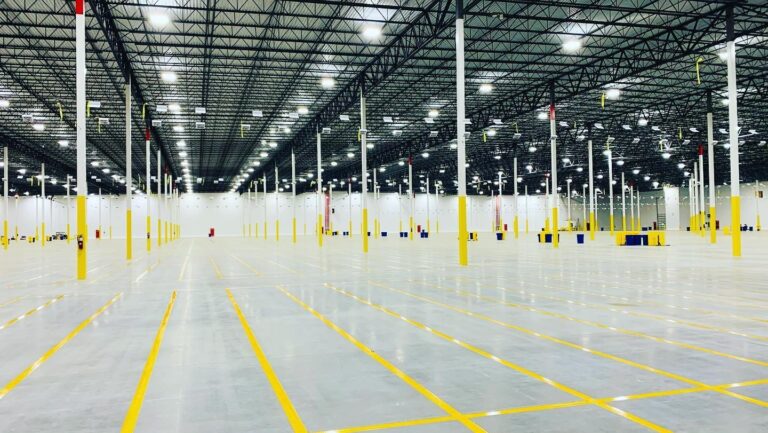
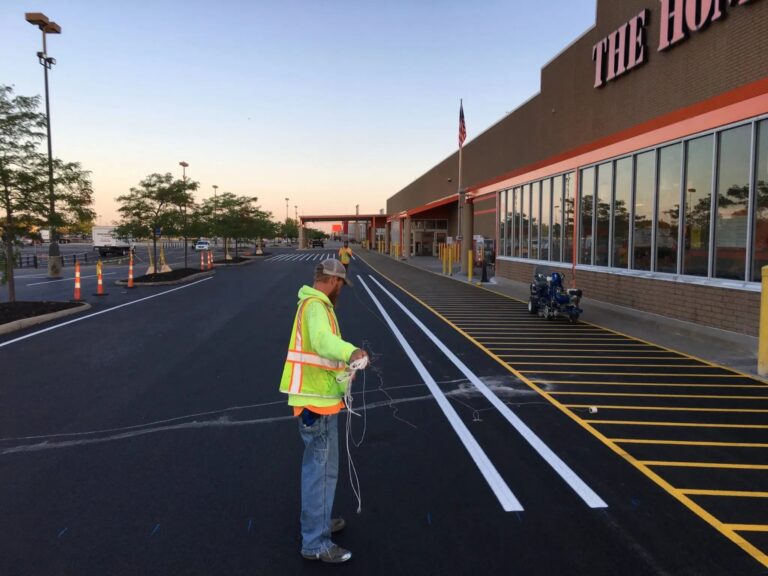
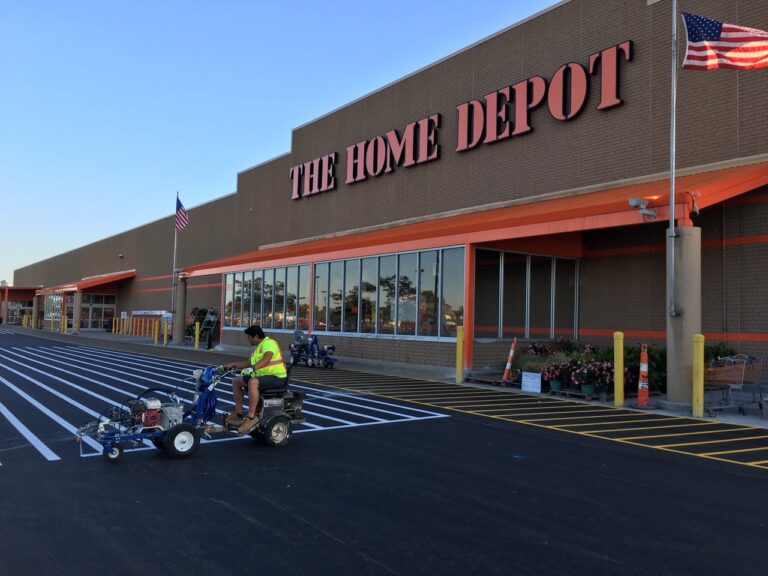
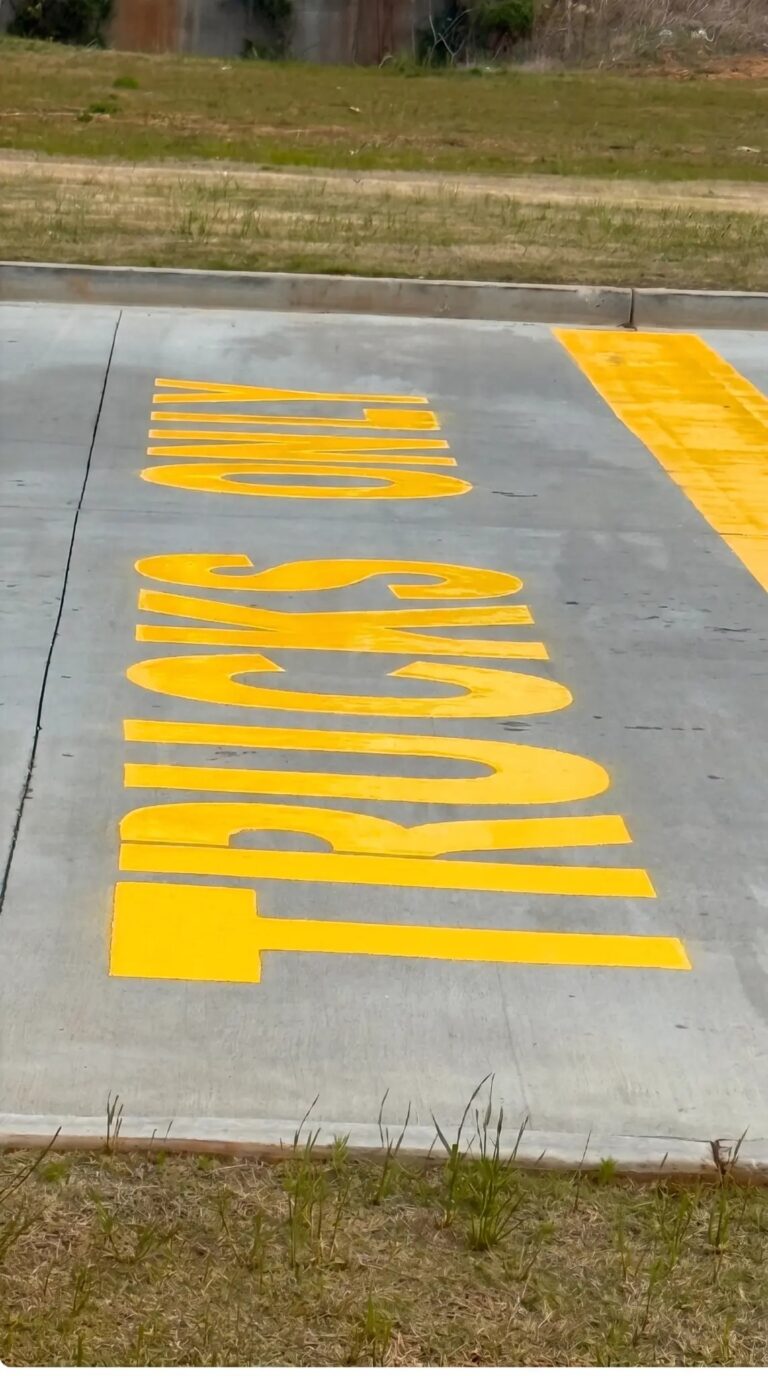
Once a traffic study identifies routing changes, separation requirements, or new staging zones, those recommendations need to be marked on the floor before they change behavior. Warehouse Line Striping translates traffic study findings into OSHA-compliant floor marking systems that direct trucks, forklifts, and pedestrians along the paths your study defined.
Warehouse Line Striping has completed over 10,000 projects in distribution centers and industrial facilities nationwide. Their floor marking systems for inventory flow are built to support the routing and separation logic that internal logistics studies produce. High-durability epoxy coatings last 3–7 years under heavy forklift traffic, so the lanes you mark today stay legible through your next study cycle. Visit Warehouse Line Striping to connect with their team and put your traffic study findings to work on the floor.
FAQ
What is the difference between an internal and external traffic study?
An internal traffic logistics study evaluates vehicle and material flow inside a distribution facility, while an external Traffic Impact Assessment measures how the facility affects public roads and intersections. The two studies use different data, metrics, and audiences.
When is a traffic impact assessment required?
Most jurisdictions require a TIA as part of the permitting process for new distribution centers or significant expansions. The threshold varies by location but typically triggers when a project generates a defined number of new vehicle trips during peak hours.
How long does a distribution center traffic study take?
Study duration depends on scope and data collection requirements. Internal logistics studies typically take two to four weeks. External TIAs often take six to twelve weeks due to regulatory coordination and simulation modeling requirements.
What is level of service in a traffic study?
Level of service (LOS) is a letter grade from A to F that describes intersection or roadway performance based on delay and volume-to-capacity ratios. LOS A represents free-flow conditions; LOS F indicates breakdown or severe congestion.
Can a traffic study improve throughput without new construction?
Yes. Traffic logistics studies identify operational improvements in product and vehicle flow that increase throughput without major capital expenditure. Common fixes include revised dock assignments, adjusted shift start times, and updated internal routing rules.