Best products for warehouse line striping durability and visibility
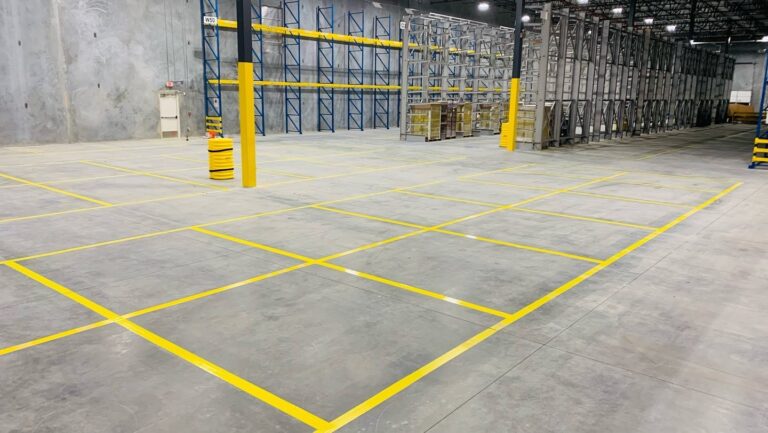
Choosing the right products for warehouse line striping affects safety, OSHA compliance, and long-term cost. Durable, high-visibility floor marking systems reduce accidents, improve aisle delineation, and withstand forklift traffic lanes in industrial distribution centers. This guide reviews the best materials and coatings, compares performance, and offers practical selection and maintenance advice so you can pick the right solution for your facility.
Best products for durability and visibility
When evaluating products for warehouse line striping, prioritize durability (abrasion, chemical and impact resistance) and visibility (color retention, retroreflectivity, contrast). The most common high-performance options are epoxy coatings, thermoplastic, methyl methacrylate (MMA), polyurethane, and industrial floor tapes. Each has trade-offs in lifespan, cure time, and application complexity.
- Epoxy coatings / epoxy line painting: Excellent adhesion and chemical resistance. Epoxy line painting is ideal for heavy forklift traffic lanes and areas exposed to oils or solvents. It typically offers good durability with moderate cure time and can be formulated with anti-slip aggregates.
- Thermoplastic: Applied as a hot-melt, thermoplastic provides highly durable, bright markings with excellent wear resistance and is commonly used for permanent aisle delineation in high-traffic zones.
- Methyl methacrylate (MMA): Very fast cure times and superior wear resistance, MMA performs well in cold environments and where quick return-to-service is required.
- Polyurethane: Flexible and UV-stable, polyurethane is better for outdoor docks or areas with sunlight exposure; it offers good chemical resistance.
- Floor marking tape: Low-downtime solution with strong initial visibility; modern industrial tapes are tough but usually have shorter lifespans than liquid/applied systems. Useful for temporary changes or fast installs.
Below is a quick comparison table to help you evaluate options by lifespan, visibility, and best use-case.
| Product | Typical lifespan (high traffic) | Visibility / Color retention | Best use-case | Cure / Return-to-service | Relative cost |
|---|---|---|---|---|---|
| Epoxy coatings (epoxy line painting) | 2–5 years | High, can include anti-slip | Forklift traffic lanes, chemical areas | 12–48 hours | Medium |
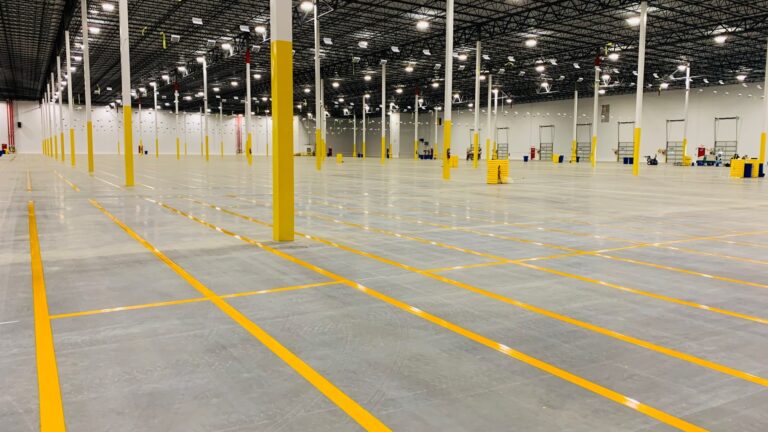
| Thermoplastic | 3–7 years | Very high, long-lasting | Permanent aisle delineation, industrial floors | Minutes (hot-applied) | High |
| Methyl Methacrylate (MMA) | 3–6 years | High | Cold or quick-return environments | 30–60 minutes | High |
| Polyurethane | 2–4 years | Good, UV stable | Outdoor docks, UV-exposed zones | 2–12 hours | Medium-High |
| Industrial floor tape | 6–24 months | Very high initially | Temporary layout, fast changes | Immediate | Low-Medium |
How to choose based on environment and compliance
Selecting the right product depends on facility-specific factors: traffic intensity, exposure to chemicals, temperature swings, and your OSHA compliance goals. OSHA standards emphasize clear marking of aisles, walkways, and hazardous zones to prevent workplace injuries and maintain a safe flow of traffic [1].
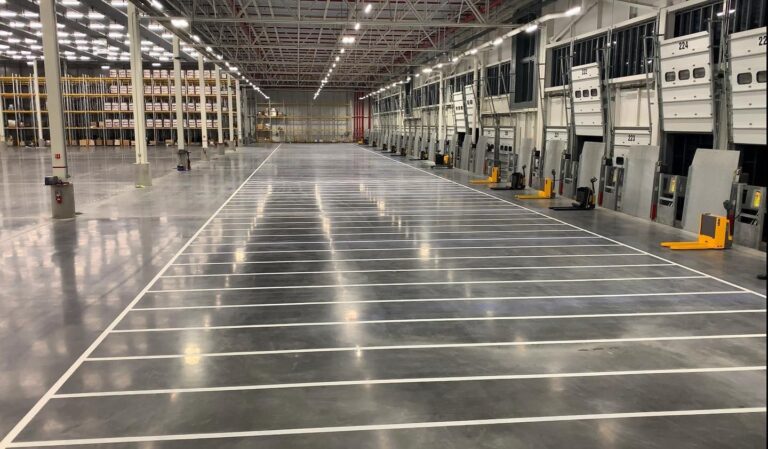
- Heavy forklift traffic lanes: Prioritize thermoplastic or high-build epoxy coatings with anti-skid additives. These options resist abrasion from wheels and pallets.
- Industrial distribution centers (IDCs): Large IDCs often require a mix—permanent thermoplastic for main lanes and epoxy or tape for flexible staging/packing areas.
- Chemical or spill-prone areas: Use chemical-resistant epoxy coatings or MMA systems to prevent degradation and staining.
- Areas requiring rapid return-to-service: MMA offers fast cure times so operations can resume quickly.
Application and maintenance best practices
Proper surface preparation, professional application, and routine maintenance extend the life and visibility of any floor marking system.
- Surface prep: Remove grease, old coatings, and contaminants. Shot-blasting or diamond grinding improves adhesion for epoxy coatings and thermoplastic.
- Environmental controls: Apply coatings at recommended temperatures and humidity. MMA tolerates colder conditions; some epoxies require warmer, dry conditions.
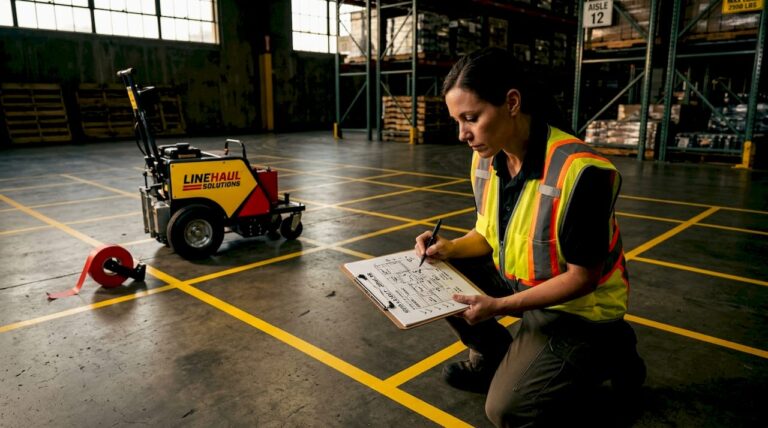
- Application method: Spray or extrusion machines provide precise, uniform lines. For epoxy line painting, experienced crews help ensure correct thickness and aggregate mixing.
- Maintenance schedule: Inspect markings weekly in high-traffic facilities. Plan reapplication cycles based on wear—predictable maintenance reduces long-term cost and maintains OSHA-compliant visibility.
- Retroreflective features: For docks and dimly lit aisles, consider reflective beads or tape for night-shift visibility.
Frequently Asked Questions
What is the most durable option for forklift traffic lanes?
Thermoplastic and high-build industrial epoxy coatings are top choices. Thermoplastic delivers exceptional wear resistance for permanent, high-traffic lanes, while epoxy line painting is preferred where chemical resistance is also required.
How do I ensure floor markings meet OSHA compliance?
Ensure aisle delineation, pedestrian walkways, and hazard areas are clearly marked with contrasting colors and maintained for visibility. Refer to OSHA guidance on walking-working surfaces and workplace layout to stay compliant [1]. Regular inspections and documented maintenance schedules help demonstrate compliance.
Areas We Serve
Warehouse Line Striping provides nationwide warehouse line striping services, including projects in major industrial hubs and regional distribution centers. Our teams regularly work in:
- Northeast: New Jersey, Pennsylvania, New York
- Midwest: Ohio, Illinois, Indiana
- South: Texas, Georgia, Florida
- West: California, Washington, Arizona
We handle installs for small warehouses to large industrial distribution centers and can evaluate your facility to recommend the best mix of epoxy coatings, thermoplastic, or tape for aisle delineation and forklift traffic lanes. Learn more about our offerings on our warehouse line striping services page: https://warehouselines.com/services/warehouse-line-striping/ and specific epoxy solutions at https://warehouselines.com/services/epoxy-line-painting/. Ready to plan an upgrade? Contact us at https://warehouselines.com/contact-us/ for a site assessment.
Conclusion
Durability and visibility are the twin pillars of effective warehouse line striping. Thermoplastic and MMA are top performers for high-wear lanes, while epoxy coatings offer excellent chemical resistance and versatility for industrial environments. Floor marking tape provides fast, flexible solutions but usually requires more frequent replacement. Prioritize proper surface preparation, professional application, and a scheduled maintenance plan to maximize ROI and maintain OSHA compliance in your warehouse. For bespoke recommendations and professional installation, explore our warehouse floor striping services at https://warehouselines.com/services/warehouse-floor-striping/ or reach out via our contact page.
References
[1] https://www.osha.gov