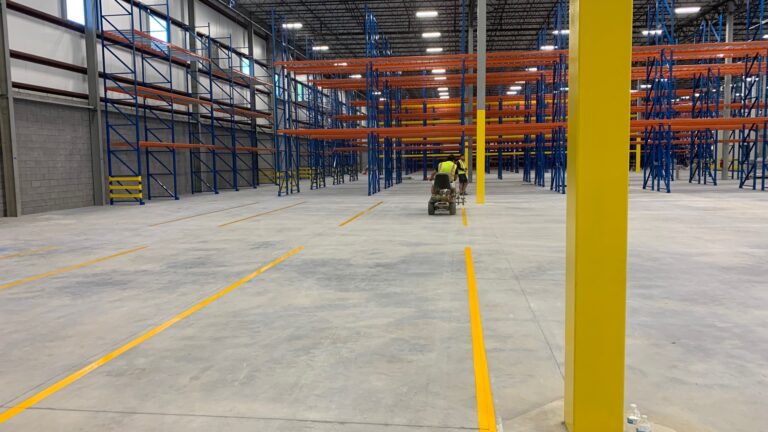
Floor Striping Work Order: A Facility Manager’s Guide
A floor striping work order is a formal document that specifies the scope, materials, schedule, and safety requirements for a floor marking project in a commercial or industrial facility. Without one, contractors and facility teams operate on assumptions, and assumptions cause rework, delays, and compliance failures. A well-structured work order ties every phase of a floor striping service to a documented standard, from surface preparation through final quality sign-off. For facility managers responsible for OSHA compliance and operational flow, this document is not optional paperwork. It is the control mechanism for the entire project.
What is a floor striping work order and why does it matter?
A floor striping work order is the instruction set that governs how, where, and when floor markings get applied in your facility. The industry also refers to this document as a floor maintenance request or a striping service order, depending on the organization. Regardless of the label, the function is the same: it translates a safety or operational need into a set of documented, executable tasks.
A floor striping and refinishing checklist covers scope definition, traffic pattern identification, stakeholder engagement, coating selection, application sequence, curing management, and cost estimation. Each of those elements belongs in a formal work order. That level of detail prevents the most common failure mode in floor marking projects: a contractor who shows up without a clear picture of what the facility actually needs.
The practical value is significant. Detailed work orders improve communication between facility management, safety teams, and contractors, reducing rework and delays. Clarified expectations and documented specifications lead to better project outcomes. For a facility manager juggling production schedules and safety audits, fewer surprises during a striping project translates directly into fewer disruptions on the floor.

What are the essential components of a floor striping work order?
A complete work order covers six core areas. Missing any one of them creates gaps that show up as disputes, delays, or failed inspections.
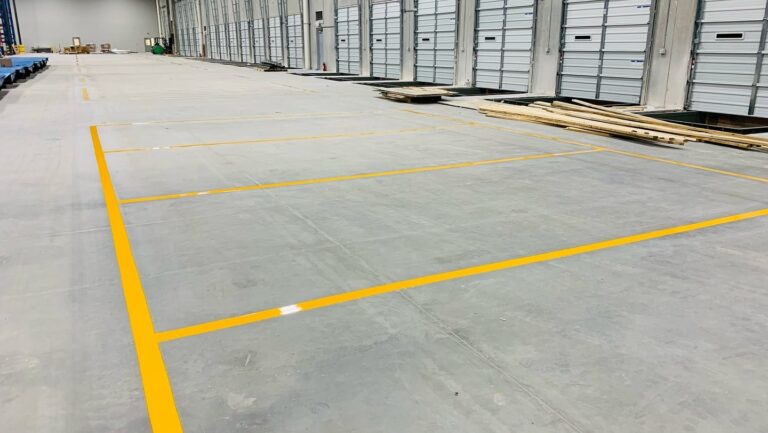
- Scope of work. Define which areas receive markings, what line types are required (aisle lines, hazard zones, pedestrian paths, equipment staging areas), and the dimensions for each. Vague scope descriptions are the leading cause of contractor disputes.
- Materials and coating specifications. Name the specific coating type, color codes, line widths, and surface preparation requirements. Reference the material selection guide for your facility type if you are unsure which coating fits your traffic load.
- Schedule and curing timeline. Specify start dates, phasing, and the minimum curing time before the area reopens to foot or vehicle traffic. Curing times vary with temperature, humidity, and ventilation, so the work order must account for your facility’s actual conditions.
- Safety and environmental controls. Include ventilation requirements, PPE standards, and any lockout tagout procedures that apply during the project.
- Quality control and acceptance criteria. Define what a completed line looks like: edge straightness, color consistency, adhesion standards, and who signs off on final acceptance.
- Stakeholder roles. Identify the project owner, the safety officer, the contractor contact, and the operations lead who approves traffic reopening.
Pro Tip: Add a simple floor plan sketch or CAD overlay to the work order. A visual reference eliminates ambiguity about line placement and reduces the chance of a contractor marking the wrong zone.
How does a floor striping work order support regulatory compliance and safety?
OSHA standards require clear marking of aisles, hazard zones, and pedestrian paths to reduce accidents in industrial facilities. A floor striping work order that references these standards by name creates a documented link between the project and your compliance obligations. That documentation matters during audits.
The connection between work orders and safety goes beyond aisle lines. A work order that specifies color codes aligned with OSHA and ANSI Z535 standards, for example, ensures that yellow marks hazard areas, red marks fire safety equipment, and white marks operational zones. Inconsistent color use across a large facility creates confusion that leads to accidents.
Lockout tagout procedures are sometimes referenced in work orders to enhance safety during striping operations. Including these protocols protects workers who are applying coatings near active machinery. A work order that omits safety protocols is not just incomplete. It is a liability.
A floor striping work order that documents OSHA-compliant specifications gives facility managers a defensible record during safety inspections and incident investigations. It shows that the marking project was planned, not improvised.
The compliance benefits extend to pedestrian and vehicle traffic separation. Facilities that use work orders to specify dedicated forklift corridors and pedestrian walkways reduce the risk of vehicle-pedestrian incidents. That separation is one of the most direct ways floor markings reduce injury rates in warehouse environments.
What is the typical process for creating and managing a floor striping work order?
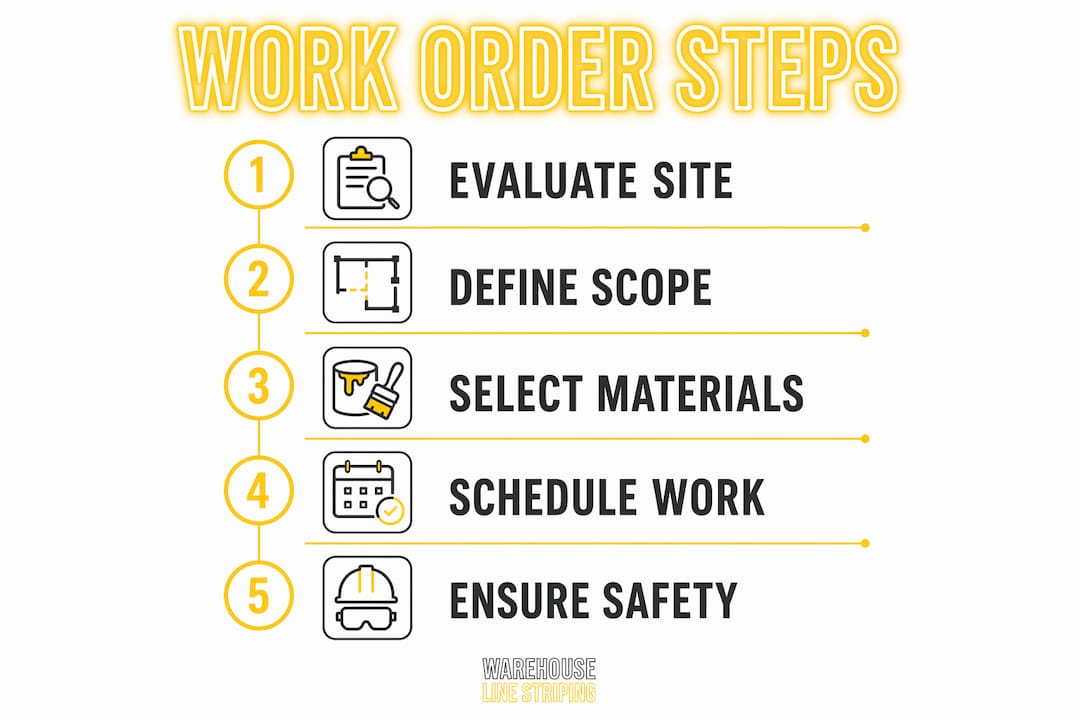
Creating an effective work order follows a clear sequence. Skipping steps early in the process creates problems that are expensive to fix after the coating is down.
- Conduct a site evaluation. Walk the facility with your safety officer and operations lead. Document current markings, identify worn or missing lines, and map traffic patterns. Note areas where forklifts and pedestrians share space.
- Draft the work description. Write a specific description of every task. “Restripe warehouse aisle A” is not sufficient. “Apply 4-inch yellow epoxy aisle lines in warehouse zone A, 200 linear feet, per OSHA 1910.22 aisle marking requirements” is.
- Select materials and specify conditions. Choose the coating based on traffic type, floor substrate, and expected wear. Work orders should include environmental controls and specific curing timeframes, because product performance depends on local conditions.
- Coordinate with safety and operations teams. Share the draft work order with your safety officer for compliance review and with your operations manager for scheduling input. Both need to sign off before work begins.
- Schedule to minimize disruption. Phase the project so active areas remain operational. Projects with well-defined milestones improve adherence to safety and quality standards. Consider overnight or weekend shifts for high-traffic zones.
- Submit digitally and track progress. Routine maintenance requests including floor striping can be submitted digitally for workflow efficiency. Digital submission speeds approval and scheduling. Track each phase against the work order milestones and document completion with photos.
Pro Tip: Build a 10% time buffer into your curing schedule. Humidity spikes and temperature drops are common in large facilities and can extend drying times beyond the manufacturer’s baseline estimate.
What are the most common materials and techniques specified in floor striping work orders?
Coating selection is one of the most consequential decisions in a floor striping work order. Epoxy, polyurethane, and water-based coatings each have advantages and limitations suited to different operational environments.
| Coating type | Durability | Curing time | Best use case |
|---|---|---|---|
| Epoxy | 3–7 years | 24–72 hours | Heavy forklift traffic, distribution centers |
| Polyurethane | 2–5 years | 8–24 hours | Chemical exposure areas, food processing |
| Water-based paint | 1–2 years | 1–4 hours | Low-traffic zones, temporary markings |
| Floor marking tape | 6–18 months | None | Flexible layouts, frequent reconfiguration |
Epoxy coatings are the standard for high-traffic industrial floors. Warehouse Line Striping uses industrial-grade epoxy formulations that last 3–7 years under forklift and pallet jack traffic. That durability reduces the frequency of restriping projects and the associated operational disruptions.
Surface preparation is non-negotiable regardless of coating type. Concrete floors must be clean, dry, and free of oil, grease, and previous coating residue before any new marking material is applied. Skipping surface prep is the single most common reason coatings fail prematurely. A work order that specifies surface preparation steps in detail protects both the facility manager and the contractor from disputes over coating adhesion failures.
Tape-based markings offer flexibility for facilities that reconfigure layouts frequently. They require no curing time and can be repositioned without floor damage. The tradeoff is shorter service life and lower resistance to heavy equipment traffic.
Key takeaways
A floor striping work order is the single most effective tool for ensuring that floor marking projects meet OSHA standards, stay on schedule, and deliver durable results.
| Point | Details |
|---|---|
| Define scope precisely | Vague work descriptions cause contractor disputes and missed compliance requirements. |
| Specify coating and conditions | Curing times vary with temperature and humidity, so environmental controls must be documented. |
| Reference OSHA standards | Work orders that cite OSHA 1910.22 and ANSI Z535 create a defensible compliance record. |
| Include safety protocols | Lockout tagout and PPE requirements belong in the work order, not in a separate verbal briefing. |
| Phase and track milestones | Projects with documented milestones adhere better to quality and safety standards. |
Why I think most facilities underestimate the work order
Facility managers often treat the floor striping work order as a formality. They hand a contractor a rough sketch and a verbal briefing, then wonder why the finished lines are the wrong width or the wrong color. I have seen this pattern repeat across distribution centers, manufacturing plants, and logistics hubs. The work order is not the paperwork that slows the project down. It is the document that makes the project work.
The most overlooked section in any work order is the acceptance criteria. Facilities spend time specifying materials and schedules, then leave the quality sign-off undefined. That gap means the contractor decides when the job is done. A specific acceptance standard, such as maximum edge deviation of one-quarter inch and full color coverage with no holidays, puts the facility manager back in control of that decision.
Coordination with the safety team is the other area where I see consistent failures. Safety officers have requirements that operations managers do not always know about. Bringing them into the work order drafting process early catches those requirements before they become change orders. The floor marking systems guide from Warehouse Line Striping is a practical starting point for understanding how marking layouts connect to safety and inventory flow requirements.
The facilities that get floor striping right treat the work order as a living document. They update it after each project with lessons learned, preferred materials, and scheduling notes. Over time, that document becomes an institutional record that makes every future project faster and more predictable.
— ET
How Warehouse Line Striping supports your work order process
Warehouse Line Striping has completed over 10,000 floor marking projects across warehouses, distribution centers, and industrial facilities nationwide. That experience shows up in every phase of the work order process, from site evaluation through final quality sign-off.
Facility managers working on their first formal floor striping work order, or updating an existing one, will find practical guidance in the floor marking installation guide and the inventory flow marking guide. Warehouse Line Striping’s team is available 24/7 to help you scope your project, select the right materials, and schedule installation with minimal disruption to your operations. Reach out through warehouselines.com to get started.
FAQ
What is a floor striping work order?
A floor striping work order is a formal document that specifies the scope, materials, schedule, and safety requirements for a floor marking project. It serves as the contract between facility management and the contractor performing the work.
What OSHA standards apply to floor striping?
OSHA 1910.22 requires clear marking of aisles, hazard zones, and pedestrian paths in industrial facilities. Work orders that reference this standard create a documented compliance record for safety audits.
How long does floor striping take to cure?
Curing time depends on the coating type, temperature, humidity, and ventilation. Epoxy coatings typically require 24–72 hours before reopening to forklift traffic, while water-based paints may cure in 1–4 hours.
How do I create a work order for floor striping?
Start with a site evaluation, then draft a specific work description that names areas, line types, dimensions, coating specifications, and curing requirements. Include safety protocols and define acceptance criteria before submitting for approval.
What is the difference between epoxy and water-based floor markings?
Epoxy coatings last 3–7 years and withstand heavy forklift traffic, making them the standard for industrial facilities. Water-based paints cure faster but last 1–2 years and suit low-traffic or temporary marking applications.