How to choose the right paint for warehouse floor line striping
Choosing the right paint for warehouse floor line striping affects safety, efficiency, and long-term maintenance costs. The selection should be based on traffic levels (especially forklift traffic lanes), substrate condition, chemical exposure, and regulatory expectations such as OSHA compliance. This guide walks facility managers and safety coordinators through the technical and operational considerations so you can select a floor marking solution that fits your industrial distribution center or manufacturing facility.
Key factors to consider when choosing paint for warehouse line striping
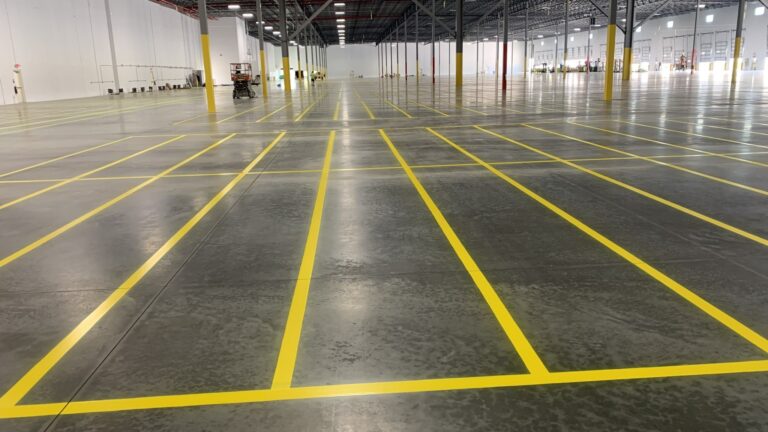
- Traffic and wear: High-impact areas like forklift traffic lanes and cross-aisles require high-durability systems such as epoxy coatings or polyurethane. Lower-traffic pedestrian aisles may be suitable for waterborne or acrylic line paints.
- Surface condition and existing coatings: Concrete that is new, porous, or previously sealed requires different preparation and primers. Proper surface prep is critical for adhesion and longevity.
- Cure time and downtime tolerance: Epoxy line paint typically offers excellent durability but can require longer cure times, affecting production schedules. Fast-curing waterborne paints allow quicker return-to-service.
- Chemical and abrasion resistance: If your facility uses oils, solvents, or frequent pallet abrasion, choose formulations rated for chemical resistance.
- Visibility and color standards: High-contrast colors, reflective additives, and anti-slip textures improve safety and aisle delineation. While OSHA doesn’t prescribe specific colors in most cases, compliance guidance emphasizes clear, consistent marking for hazard control [1].
- Maintainability and cost: Account for lifecycle costs — cheaper paint may need frequent re-striping. Durable systems can reduce total cost of ownership in busy industrial distribution centers.
- Environmental and VOC considerations: Low-VOC and water-based options reduce environmental impact and may comply with local air-quality rules.
For professional application and long-term performance, consider contracting specialized providers who understand OSHA guidance and floor marking systems — see our concrete services such as warehouse line striping services and warehouse floor striping.
Comparing common paint types for warehouse line striping
Below is a quick comparison to help you match paint systems to your operational needs.
| Paint Type | Durability | Best for | Typical Cure Time | Typical Cost | Notes |
|---|---|---|---|---|---|
| Epoxy coatings | Very high | Forklift traffic lanes, pallet lanes, heavy abrasion | 24–72 hours | Medium–High | Excellent adhesion and chemical resistance; see epoxy line painting |
| Acrylic (solvent or waterborne) | Medium | Pedestrian aisles, low-traffic aisles, temporary lines | 30 min–4 hours | Low–Medium | Fast cure; lower durability under heavy forklift use |
| Polyurethane (traffic-grade) | High | Areas needing abrasion and UV resistance | 8–48 hours | High | Good flexibility and wear resistance; often used where seam movement occurs |
| Traffic-grade waterborne urethane | Medium–High | General warehouse, indoor distribution centers | 2–24 hours | Medium | Lower VOCs, faster return-to-service, good balance of performance |
Use this table as a starting point; final selection should be based on in-person assessment of your facility’s forklift traffic, aisle delineation needs, and chemical exposure.
How to evaluate site conditions and choose the right system
- Audit traffic patterns: Record forklift counts per hour, pallet jack usage, and typical loads. Prioritize heavy-traffic forklift traffic lanes for epoxy or polyurethane.
- Inspect floor condition: Look for spalling, dirt, oil contamination, or moisture issues. These affect adhesion and may require grinding, shot blasting, or moisture mitigation.
- Confirm environmental constraints: Check ambient temperature and humidity (affect cure time), plus any VOC regulations in your state or municipality.
- Define color and layout standards: Create a floor marking plan for aisle delineation, pedestrian walkways, and hazard zones. Consistency supports OSHA compliance and effective floor marking systems [1].
- Plan maintenance: Establish a repaint schedule and budget for touch-ups, especially at high-impact corners and cross-aisles.
- Test small areas: When possible, trial a stripe in a representative high-traffic area to verify performance before a full-scale rollout.
If you need technical support or an on-site assessment, our team provides expert installation and surface prep — contact our project specialists through contact us.
Frequently Asked Questions
How long will warehouse floor striping last?
Longevity depends on the product and traffic. Epoxy coatings on well-prepared concrete in moderate traffic can last 5–10 years before major touch-up; high-use forklift lanes may need localized refresh sooner. Acrylic and waterborne paints typically require re-striping every 1–3 years under moderate traffic. Regular maintenance and targeted touch-ups extend life and reduce total cost.
Are specific colors required for OSHA compliance?
OSHA guidance focuses on clarity and consistency rather than prescribing precise colors for all floor markings. However, OSHA and related industry guidance recommend using contrasting colors and established conventions for safety (e.g., yellow for caution/walkways, red for fire-related equipment). For detailed regulatory guidance on marking aisles and traffic flow, consult OSHA resources [1].
Areas We Serve
Warehouse Line Striping is a national provider serving industrial distribution centers, manufacturing facilities, and logistics hubs across the United States. We deploy local crews experienced with regional regulations and site conditions in areas including:
– Chicago / Midwest industrial distribution centers
– Dallas–Fort Worth and Texas logistics parks
– Los Angeles and Southern California warehouses
– Atlanta and Southeast distribution hubs
– New Jersey and the Northeast freight corridor
For a site-specific estimate or to schedule an assessment, visit our warehouse line striping services page or reach out using contact us.
Conclusion
Choosing the right paint for warehouse floor line striping requires balancing durability, cure time, cost, and regulatory expectations such as OSHA compliance. Epoxy coatings often provide the best long-term performance for forklift traffic lanes and heavy-use aisle delineation, while waterborne and acrylic systems work well for lower-traffic areas and faster turnaround. Conduct a traffic and surface audit, prioritize high-impact areas, and consider lifecycle costs rather than just upfront price. For professional application and long-lasting results, partner with an experienced provider skilled in floor marking systems, surface prep, and epoxy line painting. To begin, explore our warehouse floor striping and epoxy line painting services or contact us for a free consultation.
References
[1] https://www.osha.gov